
By Elton Uliana
Earlier this year, reading the February issue of Literary Review, I came across a tiresome pattern, familiar enough by now, which seems to pass for the normal order of things. Across the issue there were eight reviews or review roundups involving books in translation, covering ten books translated from Japanese, German, Czech, French and Danish among other languages. The translators were there, properly credited beneath the titles, and that is no small thing, of course, because we translators have not always been able to take even that much for granted.

Then the reviews began.
In most of them, the translator promptly disappeared. Reviewers discussed style, praised or faulted the prose, weighed tone, described narrative effects, and seemed to assume that English had happened to the books more or less by itself, as if by some minor alchemy. Thankfully, there were two exceptions. Writing about Michio Hoshino’s The Traveling Tree, Tim Hornyak briefly praised Eli K. P. William’s “elegant” translation. More strikingly, Anne Billson, reviewing Georges Simenon’s The Cat, devoted a substantial part of her piece to Ros Schwartz and to the peculiar problem Simenon poses for an English translator. Schwartz has written about Simenon’s deceptively simple economy of language, his restricted vocabulary and the temptation for a translator to interpret what the French deliberately leaves unsaid, all in the effort to find an English equivalent for a writer whose apparent simplicity is, on closer inspection, a highly deliberate affair. Billson seems to take that thinking seriously enough to make it part of the explanation for why the English novel in front of her sounds the way it does.
The paragraph on Schwartz’s meticulous craft was refreshing to see, which is perhaps the real problem: it should have seemed perfectly ordinary. The contrast is sharpened, though, by Katy Waldman’s recent New Yorker piece on Jacqueline Harpman’s I Who Have Never Known Men, whose curious BookTok afterlife provides the article’s point of departure before it broadens into Harpman’s translated work more generally and the newly published story collection We Were Forbidden. Schwartz is duly identified as the translator of the revised English edition, and Waldman even notes that much of Harpman’s work has been translated into English; translation itself, however, then largely disappears from the account of how that English sounds. Credit only. One can perhaps forgive BookTok for behaving as though books simply materialise in the language in which they are encountered – the algorithm has little reason to ask how they got there – but literary criticism might reasonably be expected to know better. If criticism is interested in rhythm and register, syntax and comic timing, even the weight of individual words, then in a translated book it has already entered the territory of translation, whether or not it chooses to acknowledge the process. Nobody is asking reviewers to turn every book review into a seminar in comparative linguistics, still less to scatter compliments before translators as though we were a particularly vain professional caste in need of regular pats on the shoulder. The point is more ordinary than that; it is a question of critical accuracy.


There has, after all, been real progress. The #TranslatorsOnTheCover campaign, launched in 2021 through an open letter by Jennifer Croft and Mark Haddon and hosted by the Society of Authors, gave a particularly visible form to something translators had been arguing, lobbying and occasionally grumbling about among ourselves for years: that the person who wrote the English ought not to disappear from the book that contains it. The campaign asks writers to press their publishers to put the translator’s name on the front cover, and has gathered thousands of signatures, been taken up enthusiastically across the translation community and helped persuade publishers to change their practice, the credit itself reminding the reader that these sentences did not begin their lives in English, and that the book in their hands comes from another literary culture. Someone recreated the whole thing in English, word by word. It would therefore be perverse to argue that nothing has changed: on the contrary, something important has changed, what has not progressed at the same speed is critical attribution.
These concerns are hardly new. As early as 2019, two readers of The Guardian, Philip Slotkin and Julia Booer, were protesting the omission of translators’ names, the former in a review of Niklas Natt och Dag’s The Wolf and the Watchman, the latter in the newspaper’s coverage of that year’s Man Booker International Prize shortlist, which, ironically, omitted the translators even though the prize money was shared equally between authors and translators. The Guardian’s original shortlist report was subsequently updated to include the names of all six translators; a welcome correction, certainly, but hardly the end of the matter. In 2023, the year I happened to serve on the jury of the PEN America Translation Prize, the organisation’s Translation Committee went further in its “Manifesto on Literary Translation” calling on reviewers not merely to name translators but to examine their creative agency in matters of diction, style and register. More recently, in 2024, Stiliana Milkova, editor of Reading in Translation, and her students at Oberlin College published a set of practical recommendations in these very pages, calling for precisely this kind of critical engagement with translated literature. Yet, as the reviews examined here suggest, such engagement remains far from routine.
Padma Viswanathan put the difficulty unusually well after Gabino Iglesias reviewed Ana Paula Maia’s On Earth As It Is Beneath, translated by her, in the New York Times. Iglesias admired the book and specifically admired its prose, calling Maia’s writing beautiful and gripping. Writing afterwards on her own website, Viswanathan was pleased with the review but puzzled that its status as a translation went entirely unmentioned in the body of the piece. Her point was not a complaint about an editorial error in her name, a fairly modest threshold one hopes literary criticism can still clear, nor was she asking for some greater share of the applause. It was that the review praised “the book’s prose” without acknowledging that the prose the reviewer was reading, quoting and assessing was, at the most immediate textual level, prose shaped in English by Viswanathan.
Her response was notably free of professional woundedness. Maia, she insisted, is a wonderful writer whose artistry she had no wish to diminish. Her question was what it means to praise prose encountered only in translation while showing no curiosity about “how it came to manifest in English.” What interests me most about Viswanathan’s intervention is that she does not demand expertise the reviewer cannot possess. A critic who does not read Portuguese cannot judge every relationship between Maia’s sentences and Viswanathan’s, and it would be absurd to pretend otherwise. But that critic can still recognise that a relationship exists. Viswanathan suggests looking at how the English reads, considering its consistency, charge and tonal appropriateness. Not knowing the source language, she argues, is no reason to behave as though the text never crossed one.
That distinction seems to me crucial. We are no longer dealing only with the old problem of the invisible translator; sometimes the translator is perfectly visible. The name is on the cover, in the bibliographical information and beneath the title of the review; what disappears is something subtler: the translator’s relation to the qualities criticism then proceeds to judge. If a reviewer calls the English supple or funny, or admires its lyricism, who has produced those effects? If it feels ponderous, florid or stilted, where exactly does the problem lie? The answer will not always be “the translator,” any more than praise should automatically be divided mathematically between two writers. Translation complicates attribution rather than making attribution impossible.
From here I want to narrow the field. Brazilian literature is the body of work I know well enough, linguistically and critically, to move beyond suspicion and look at what actually happens between Portuguese originals, their English translations, and the reviews written about them. Enough Brazilian fiction has appeared in English over the past year to make the pattern more than anecdotal, while Portuguese allows me, where necessary, to go back behind the English and ask a question that a monolingual reviewer cannot: what, in fact, has changed? I do not mean that knowledge of the source language confers some final authority; translation rarely yields so obediently to forensic inspection. But it does allow us to distinguish, at least sometimes, between a stylistic feature already emphatic in Portuguese, one sharpened or softened in English, and one whose effect seems to arise from the peculiar negotiations between the two. The point is not to catch critics out, but to pursue something larger and, I hope, more useful: what becomes possible once naming the translator is understood as the beginning of critical attention rather than its completion.
Ana Paula Maia is a useful place to begin because the case already mentioned makes the difference between visibility and attribution unusually clear. Her On Earth As It Is Beneath, also translated by Padma Viswanathan for Charco Press, reached the 2026 International Booker shortlist, so Viswanathan’s name accompanied Maia’s through a great deal of the resulting coverage, which is a huge progress. But the same novel also shows an encouraging situation when a reviewer moves beyond bibliographical acknowledgement. Benjamin J. Murphy, writing in Necessary Fiction, credits Viswanathan with preserving what he calls a “mythic vision” recalling McCarthy’s “oracular intensity.” The McCarthy comparison is debatable, perhaps inevitably so, since Anglophone reviewing has a habit of welcoming foreign writers by finding them an English-speaking relative at passport control. More interesting is what Murphy attributes to the translation by asserting that it is an English capable of sustaining severity without losing the strange enlargement of Maia’s world into something harsher and more elemental. He may be right or wrong about the result, but what matters here is that he brings translation to the forefront of his judgement.
Jay Boss Rubin goes considerably further in his review of Juliana Leite’s Exemplary Humans, translated by Zoë Perry. The novel depends heavily on Natalia, its hundred-year-old narrator, whose voice has to move between bodily comedy and philosophical reflection, age and appetite, memory and the mundane without settling comfortably into any one of them. Rubin does not merely call Perry’s translation elegant but identifies the problem she has had to solve, writing that Perry succeeds in bringing the subtleties of Leite’s voice and Natalia’s over from Portuguese while creating “a new, irresistible English-language voice in the process.” Later he notices how she handles cultural and gastronomic material, including the brigadeiro, without turning the novel into an annotated tour of Brazilianness. The sweet can remain a brigadeiro because the sentence around it teaches the reader enough. I like Rubin’s formulation because it makes translation neither invisible nor sovereign. Perry has not somehow become the author of Exemplary Humans, but neither has an already completed voice travelled intact from Leite’s Portuguese and taken up residence in English.


The question becomes more sensitive once critical evaluation turns less complimentary. Consider Carla Madeira’s It’s All River (Liveright), translated by Alison Entrekin. A recent New Yorker notice identifies the book quite properly as translated from Portuguese by Entrekin and then, in the following sentence, remarks that “Madeira’s writing is sometimes unnecessarily florid”. Perhaps it is. Madeira may be florid in Portuguese; Entrekin may have preserved that floridity with admirable exactness; English may make a tendency in the original more conspicuous, or the translation may in places have intensified it. I do not yet know, and that is precisely why I want to place the two texts beside one another before deciding. What interests me for now is the vocabulary of judgement: the translator is present in the bibliographical sentence and absent in the aesthetic one. Kirkus offers an almost inverted version of the same thing. Its review explicitly notes that Madeira is translated by Entrekin, then praises the novel’s “witty prose” and the speed with which that prose rushes the reader through its pages. Again, the judgement may be entirely sound. But wit is among the least immaterial qualities language possesses; it depends on timing and diction, syntax and cultural expectation, sometimes on nothing more substantial than where a word eventually lands. To praise wit in translated prose while treating translation as merely bibliographical information is to leave part of one’s own judgement unexplained. Credit only.
The stakes rise with Morgana Kretzmann’s The Red Earth. Publishers Weekly identifies Daniel Hahn as the translator from Portuguese, describes a novel moving at “breakneck pace” through multiple points of view, and then delivers the less flattering verdict that its characters are flat and “the writing is stilted.” Here the old demand simply to “name the translator” is nowhere near enough. Hahn has been named; what has not been named is the object of the criticism. Is Kretzmann’s Portuguese deliberately angular? Has Hahn reproduced a stiffness already there, introduced one that was not, or found an English in which something natural to the Portuguese becomes resistant? It would be unfair to demand that a short trade review answer all of these questions, though it is not unfair to notice that without asking any of them, “the writing is stilted” sounds more definitive than the evidence available to an English-only reader can quite support. Hahn appears elsewhere in Publishers Weekly, this time as the translator of Antônio Xerxenesky’s An Infinite Sadness (Charco Press). Credit only. His name is in the heading; the review then finds a “static quality” in the drama and says that the characters can sound like “philosophizing mouthpieces.” Characterisation is not reducible to translation, of course, but characters who sound like mouthpieces have, at some point, to sound like them in sentences. Again the English is part of the evidence while the translation remains outside the argument.
Voice produces another version of the same difficulty. Bella Moses’s review of Mariana Salomão Carrara’s The Loneliest Tree in the World (Catapult) in Foreword Reviews prominently names its two translators, Julia Sanches and Alison Entrekin, before praising the novel’s four non-human narrators for voices that are “distinctive and revelatory” and its passages of lyrical and philosophical reflection. The translators do not reappear. Credit only. There need be no accusation here, but once criticism begins discriminating among voices, noticing their lyricism, their distance from one another and the intimacy they manage to create, translation has ceased to be incidental. Those voices are precisely where it is happening. Sanches provides yet another useful example in Carol Bensimon’s Diorama (MCD), which she co-translated with Zoë Perry. Publishers Weekly names both translators in the heading, then praises the novel’s tangled memories, relationships and museum scenes for hanging together in “Bensimon’s skilled hands.” The hands actually producing the English sentences have disappeared between heading and judgement. Credit only.


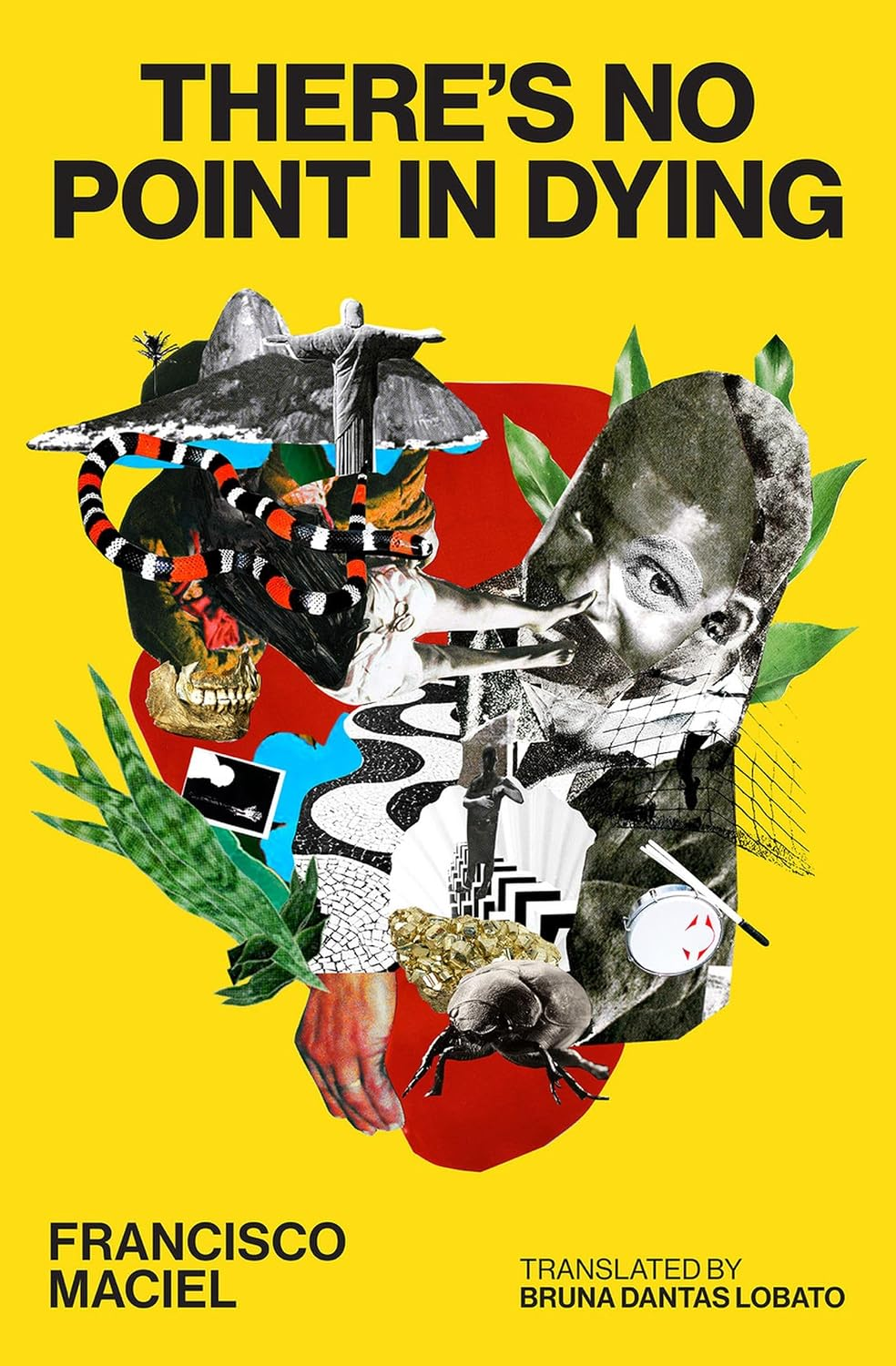
Extending this point, Bruna Dantas Lobato offers another voice case in Francisco Maciel’s There’s No Point in Dying (New Vessel Press). Foreword Reviews identifies her prominently as the translator, then pays close attention to speakers changing, perspectives shifting and narrators moving between direct address, philosophical allegory and visionary language. These are precisely the effects for which translation would seem critically relevant, and yet it is not discussed. Credit only, again, though this time the silence is particularly conspicuous because the review seems to be already listening quite carefully to voice.
There are, mercifully, a few moments when the pattern breaks. Kirkus, reviewing Micheliny Verunschk’s The Jaguar’s Roar (Liveright), does substantially better than the norm. Juliana Barbassa is not merely named: the review draws on her introduction to explain that Verunschk mixes aggressively colloquial Portuguese with invented words in order to produce disorientation, then relates that linguistic strategy to what the English reader experiences. It does not independently compare the two languages, but translation has at least entered the account of how the book works. A modest victory, to be sure, but still exceptional.
By now the cases have arranged themselves into a rather dispiriting little taxonomy, one translators have been trying to draw attention to for some time. One category keeps recurring: credit only. Literary Review names Rahul Bery beneath Samir Machado de Machado’s The Good Nazi (Pushkin Vertigo), then calls the novel “beautifully written” and praises its sly jokes; Bery never re-enters the discussion. The Guardian is even cleaner as an example: “translated by Rahul Bery” appears beside the title, after which Laura Wilson calls the novel gripping, finds its twist ingenious and its resonance queasy, and never returns to the translation. The translator has been impeccably credited and critically dismissed from the premises. Credit only.
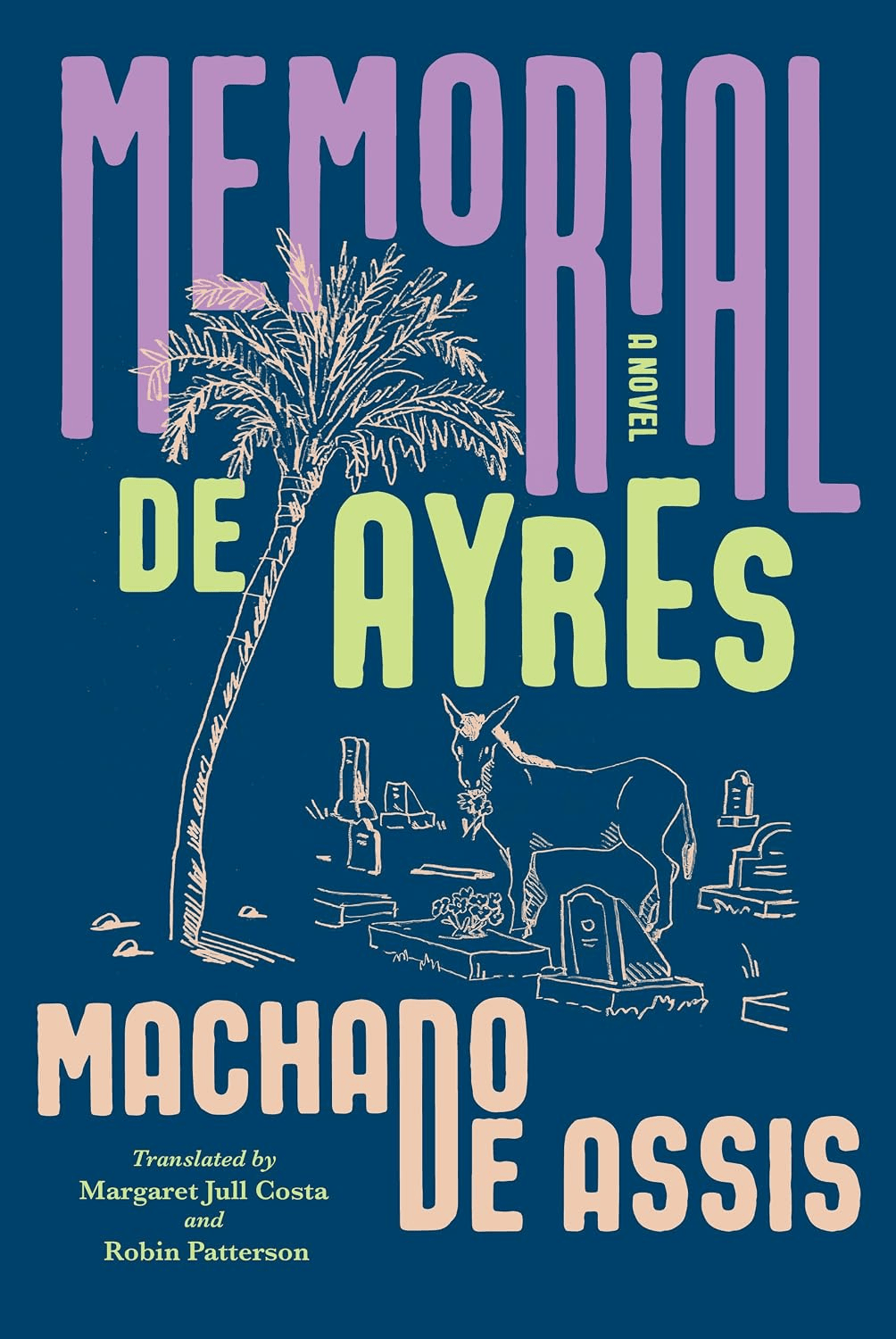
A sentence of credit is not the same as a sentence of thought. Publishers Weekly gives Margaret Jull Costa and Robin Patterson the former, naming them as the translators of Machado de Assis’s Memorial de Ayres, then calls the novel “ruefully funny,” follows the satirical episodes of Ayres’s diary and discusses his perspective on a disappearing world. How that voice and comic angle have been recreated in English is left, rather fittingly, to disappear from view.

Julia Sanches provides an especially useful contrast because the same translation attracts both kinds of reviewing. In Necessary Fiction, Kay Kemp’s discussion of Ana Paula Pacheco’s Pandora (Transit Books) explicitly praises the beauty and fluidity of Sanches’s translation and, more importantly, says what those qualities do: its sensual texture sustains rather than softens the novel’s disgust and shame. This is criticism in the fuller sense: it is a claim about the effects the English helps to produce and the function it performs within the novel rather than a mere congratulatory adjective attached to the translator’s name. Elsewhere, with depressing punctuality, the familiar pattern returns. Foreword Reviews names Sanches, then discusses deadpan narration, tonal instability, formal shifts and visceral imagery without reconnecting those effects to her; Publishers Weekly likewise names her as the translator before describing the narration as experimental, provocative and consistently engrossing, without asking how those qualities have been negotiated in English. Credit only, twice over. One translation, three reviews, and three rather different ideas of what it means to take a translator’s work seriously.

It is worth repeating the point because the pattern keeps repeating itself. Translation is not an ornamental stage between writing and reading. It involves weighing words against words, certainly, but also punctuation, spacing, syntax, rhythm and silence, then testing each decision against the phrase, the sentence, the paragraph, the chapter and eventually the work as a whole. Any claim about voice, pace, texture or tone in English is therefore already brushing against that labour, whether criticism names it or not.
There are, fortunately, encouraging examples in which reviewers manage the distinction without turning their pieces into translation workshops. The return to Padma Viswanathan here is deliberate, but the novel is different. Anderson Tepper, writing about Maia’s Bury Your Dead for Words Without Borders, notices the movement of the prose across different registers and credits Viswanathan with capturing its shifts and reverberations, later describing the translation as “sharp and resonant” in relation to Maia’s terse episodic structure. He does not stop reviewing Maia in order to review Viswanathan. He simply refuses the fiction that the two activities have nothing to do with one another.

That, increasingly, seems to me the modest adjustment criticism needs. The #TranslatorsOnTheCover campaign itself describes putting the translator on the cover as a first step. What comes next is wonderfully undramatic: carrying that awareness from the cover into the criticism. None of this requires a new policing apparatus for book reviewing. A little more awareness would go a surprisingly long way. Publishers sending translated literature out for review might remind editors, quite routinely, that the prose being assessed has passed through another writer’s language and labour. Authors can do the same when they speak about their books in English, as can festivals, publicists and prize organisers. Readers, too, can learn to notice that the translator’s name is not an ornamental second credit but information about how the book before them came to exist.
The aim is not to redistribute compliments, still less to demand that every translator receive a ceremonial pat on the head. Criticism ought to remain free to dislike a translation, to find it wooden, overworked or simply unsuccessful. What would change is the accuracy of the judgement, and with it a measure of critical accountability. A modest ambition, perhaps, though literary criticism might reasonably be expected to manage it. Terry Eagleton opens How to Read Literature by comparing the art of analysing literature to clog dancing, “almost dead on its feet.” The translator, on present evidence, sometimes does not even make it onto the dance floor.
***
P.S. Since writing this, I have come across a more troubling habit still. In the current issue of the TLS, Ladee Hubbard reviews Beatriz Nascimento’s The Dialectic Is in the Sea: The Black Radical Thought of Beatriz Nascimento, yet Christen A. Smith, Bethânia N. F. Gomes and Archie Davies, who edited and translated the volume, are absent even from the bibliographical heading. There are evidently still occasions on which “credit only” would count as progress. (See Ladee Hubbard, review of Beatriz Nascimento, The Dialectic Is in the Sea: The Black Radical Thought of Beatriz Nascimento, Times Literary Supplement, current issue).
P.P.S. And apparently the problem extends beyond book reviews. In an interview published in the Los Angeles Times in December 2025, Marc Weingarten speaks with Djaimilia Pereira de Almeida about “Three Stories of Forgetting” (Farrar, Straus and Giroux Originals, 2025), translated by Alison Entrekin (originally published in Portugal as “Três histórias de esquecimento”, Relógio D’Água, 2021). Yet the translator’s name does not appear once in the published piece, neither in the interviewer’s questions nor in the author’s answers. Perhaps there is a fourth story of forgetting here after all. “Not even a credit, yet again.”
Elton Uliana is a writer, literary critic and translator. He coedits the Brazilian Translation Club at UCL, where he also contributes to teaching in Translation Theory. His work has appeared in World Literature Today, The Massachusetts Review, West Branch, Asymptote, Routledge’s Art in Translation, HarperCollins’ Daughters of Latin America, UCL Press’ Contemporary Afro-Brazilian Short Fiction and elsewhere.