
Tag Archives: Andrew Martino
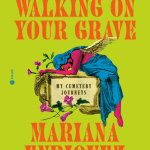
Mariana Enriquez’s Graveyard Adventures in “Somebody is Walking on Your Grave: My Cemetery Journeys,” Translated from Spanish by Megan McDowell
Ever since the publication of her first short story collection, “Things We Lost in the Fire” (2017 in English translation by Megan McDowell), Mariana Enriquez has established herself as one of the most powerful voices in contemporary world literature. Born in Buenos Aires in 1973, Enriquez joins a long line of Argentine writers who pushed the boundaries of fiction, her voice is her own and completely in tune with the complicated and violent history of that country.

Off in the Distance: Lalla Romano’s “In Farthest Seas,” Translated from Italian by Brian Robert Moore
Poignant, and at times breathtakingly honest, “In Farthest Seas” joins a select group of narratives that help us cope with the death of a loved one through the eyes of the writer, who cannot help but transform that pain into a story so that the writer, as well as the reader, may begin to comprehend it.

Where We Begin: Alba De Céspedes’ “There’s No Turning Back,” Translated from Italian by Ann Goldstein
“There’s No Turning Back” is an interesting early novel, and if one reads carefully one can detect the ways in which De Céspedes is searching for a voice. This is not to say that the novel is flawed, or even disappointing as an early novel. Instead, it gives the reader a profound introduction into the themes and style De Céspedes would later develop as a more mature writer.

The Uncanny in Our Back Yards: Mariana Enriquez’s “A Sunny Place for Shady People,” Translated from Spanish by Megan McDowell
A Sunny Place for Shady People: Stories is Mariana Enriquez’s follow-up to her brilliant and terrifying novel “Our Share of the Night.” This new collection is a triumphant return to the short form, a return that still contains the horror and sophistication of her novel but in more digestible bites. Readers of Enriquez will recognize her exploration of horror in this collection, all the while offering something new, something frighteningly comprehensible and insightful into our contemporary human condition.
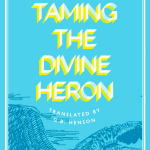
A Trick of the Tale: Reading and Traveling in Sergio Pitol’s “Taming the Divine Heron,” translated from Spanish by George Henson
“Taming the Devine Heron” is Henson’s sixth translation of books by Pitol. It’s also the second of his trilogy “The Love Parade.” The novel is a major work exhibiting Pitol’s cosmopolitan sensibilities. It’s also a meta-narrative that highlights the self-reflection so evident throughout his oeuvre. Pitol’s literary works are grounded in a type of hybridity that combines fiction, memoir, travel narrative, and biography, to name a few genres. In fact, the entire novel could be read as an exercise in literary imagination, which knows no borders and whose boundary is exclusively contained by the human capacity to wonder.

The Provincial as Metaphor in Lorenza Pieri’s “Lesser Islands,” Translated from Italian by Peter DiGiovanni, William Greer, Donatella Melucci, Jenna Menta, Christopher Paniagua, and Kira Ross
Lorenza Pieri has created a world not quite our own and not quite foreign, and this is a testament to her talent as a writer. As readers we are all searching for something, whether it’s escape, enjoyment, information, or validation. “Lesser Islands” reminds us that even though we all suffer times of remoteness and provincialism, the opening of a book can be a magical way to connect without leaving the comfort of one’s chair.

A Plague for Our Times: Albert Camus’ “The Plague,” Translated from French by Laura Marris
It is impossible to read The Plague now without thinking of COVID-19 and its globally catastrophic and ongoing wreckage. With Laura Marris’ new translation, we have a text for the twenty-first century. I hesitate to write “for a new generation,” as accurate as that may be, because even those of us who’ve read Stuart Gilbert’s translation can find new meaning, new life, in Marris’ extraordinary translation.

A Close Encounter with Domenico Starnone
By Andrew Martino Beneath the shadow of the golden dome of the Massachusetts State House on Boston’s Beacon Hill, the Boston Athenaeum sits quietly on a shaded street. To the casual passerby, the building sticks out for its striking architecture in a city increasingly dominated by steel and glass. Inside, some of the most profound […]

A World Filled with Echoes: On Natalia Ginzburg’s “The Little Virtues”
By Andrew Martino There are books that become a part of us in profound and magical ways. Books that become companions, whether in childhood or in adulthood, and that leave a trace of its magic on our souls. For those of us who read voraciously, most books are forgotten, or at best, leave only a […]