
Category French

Restoring the Flesh of Female Bodies: Cécile Tlili’s “Just a Little Dinner,” Translated from French by Katherine Gregor
The plot of Katherine Gregor’s translation of Cécile Tlili’s “Just a Little Dinner” unfolds in an apartment in Paris at the end of August. It follows the dramas of two couples at a dinner party organized by Étienne, who hopes to strike a business deal with his guest, Johar. he novel’s title becomes more ironic as the story unravels. Death and transformation fill the apartment’s space, making the scene much more than “just a little dinner.”

One Man, Three Voices: A Case for an English Retranslation of Mohamed Choukri’s “Al-Khubz al-Hafi”
This call is not to assert that “For Bread Alone” is a poor translation. Instead, for a book whose translations have been so hotly contested and so politically bound, the more perspectives available for an Anglophone audience, the better these complexities can be elaborated and explored. To expect a single translation to capture every facet of a work is to set it up for failure, but Bowles’ alteration of Choukri’s nuanced critique of colonial violence and its impact on the everyday realities of Moroccan communities and individuals is not a loss the Anglophone readership should be expected to sustain. Whereas a single translation acts as a lens through which we view a slightly altered work, the existence of many translations promise to render this lens kaleidoscopic.
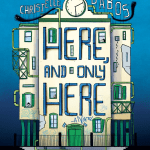
Vivid, Visceral, and Vulnerable: Christelle Dabos’ “Here, and Only Here,” Translated from French by Hildegarde Serle
The entire novel is permeated with a slimy quality, constantly infusing even unrelated passages with themes of the ever-present, stomach-churning schmoil. Dabos’ descriptions are vivid, often visceral and disgusting, which creates a greasy atmosphere in contrast to the vulnerability expressed by each narrator in this hostile school––a school actually based on Dabos’ own childhood school in the south of France, with prison-like architecture and filthy outdoor toilets.
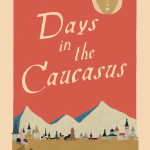
EAST AND WEST MEET IN BANINE’S “DAYS IN THE CAUCASUS,” translated from French by Anne Thompson-Ahmadova
Banine came into the world in Baku, Azerbaijan, in 1905. She grew up taking lessons in French, German, English, and Russian, participating in feasts marking the end of Ramadan, playing the piano, traveling between the city and the countryside with relatives, talking to poplars, talking to rivers. Daydreaming.

Memory and Freedom in Makenzy Orcel’s “The Emperor,” translated from French by Nathan H. Dize
Makenzy Orcel’s “The Emperor,” translated by Nathan H. Dize, is a novel of contradictions. The narrator, who has been deprived for years of his autonomy living under the control of the Emperor, a corrupt religious leader, must use his voice to fully free himself, even though he lives in a “world that brings death to freedom” (11).

Breaking Taboos and Caregiving in Kettly Mars’s “I Am Alive,” translated from French by Nathan H. Dize
Haitian writer Kettly Mars confronts readers with the silence surrounding mental illness in her novel “I Am Alive,” translated by Nathan H. Dize. Set in the immediate aftermath of the 2010 earthquake and told from multiple viewpoints, the novel plunges us into the secluded world of the Berniers, a bourgeois family living in Fleur-de-Chêne.

LITERARY REVOLT VS. IDEOLOGICAL FANATICISM: MOHAMED MBOUGAR SARR’S “BROTHERHOOD,” TRANSLATED BY ALEXIA TRIGO
In his debut novel “Brotherhood,” Mohamed Mbougar Sarr asks what happens when pervasive religious ideology is pitted against clandestine authorship. When society comes under the control of violent extremists, and the very act of composition becomes grounds for execution, how can one reconcile personal moral convictions against the drive to survive?

Memory and the Search of Stories Past: Emmelie Prophète’s “Blue,” Translated from French by Tina Kover
While “Blue” is set in a terminal of the Miami airport, to say that the novel is set in any one place in time would be misleading, when the novel is actually set in numerous locations, Miami, the shadow of New York City, a mountainous Haitian village named Suzanne, and the Haitian cities of Les Cayes and Port-au-Prince and many moments in time.

A Plague for Our Times: Albert Camus’ “The Plague,” Translated from French by Laura Marris
It is impossible to read The Plague now without thinking of COVID-19 and its globally catastrophic and ongoing wreckage. With Laura Marris’ new translation, we have a text for the twenty-first century. I hesitate to write “for a new generation,” as accurate as that may be, because even those of us who’ve read Stuart Gilbert’s translation can find new meaning, new life, in Marris’ extraordinary translation.

Haiti in Translation: Nathan Dize Interviews Emma Donovan Page
When Jan J. Dominique published her memoir Wandering Memory in French in 2008, eight years had gone by since her father’s assassination. On April 3, 2000, Jean Léopold Dominique was gunned down in front of the radio station he owned and operated since the 1960s. The New York Times reported on Dominique’s death, a state funeral was held, and Haitians living in the country and abroad went into a period of collective mourning.

SETTING THE RECORD STRAIGHT: MERYEM ALAOUI’S “STRAIGHT FROM THE HORSE’S MOUTH,” TRANSLATED FROM FRENCH BY EMMA RAMADAN
Alaoui’s novel, as hilarious as it is political, is a testament to the fact that literature does not have to be depressing or solemn to deliver a powerful message. Like Ramadan, I hope more publishers will invest in translating playful books that appeal to diverse readerships while defying stereotypes and expanding perspectives.

A Poet’s Legacy: René Noyau’s “Earth on Fire,” Translated from French by Gérard Noyau and Peter Pegnall
“Earth on Fire” is a compelling gateway into Noyau’s work and into Mauritian literature.

The Net and the Fence: On Jean Daive’s “Under the Dome: Walks with Paul Celan,” Translated from French by Rosmarie Waldrop
By Anna Levett Several times in Under the Dome, Jean Daive’s elliptical, poetic memoir about his friendship with the Jewish German-language poet Paul Celan, a net bag makes an appearance. I imagine it’s the kind of bag in which you would carry fruits or vegetables that you’d bought from a market—a bag made of mesh […]

The Safeguards of Translation: Philippe Jaccottet’s “Patches of Sunlight, or of Shadow: Safeguarded Notes, 1952-2005,” Translated from French by John Taylor
By Samuel Martin Holding the latest volume of notes by the Swiss poet and translator Philippe Jaccottet, turning it over in one’s hands, one’s first impression is indeed of volume and bold color; it is another of the lavish editions that Seagull Books have made their calling card in recent years. One’s second impression, having […]

A Manifesto for Uncertain Times: Noémi Lefebvre’s “Poetics of Work,” Translated by Sophie Lewis
By Andria Spring “Are we at war, Papa?” “What makes you think that?” “I don’t know, all these soldiers outside the shops.” “Then it must be war.” “But people are shopping in the sales.” “So we can’t be at war.” “The police are checking handbags and ID cards.” “That means it’s war.” “But there are […]