
Category world literature
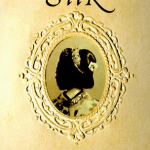
Workshop Notes Part 2: Translation and Retranslation
Published in Italy in 1996, “Silk” (Seta) was an immediate bestseller. It was translated in English in 1997 by Guido Waldman – a respected translator and editor whose titles include Ludovico Ariosto’s “Orlando Furioso” and Giovanni Bocaccio’s “The Decameron.” Retranslated by none other than Ann Goldstein in 2006, “Silk” accompanied the film adaptation, an international co-production that didn’t receive much acclaim. Despite the film’s lackluster fate, the retranslation in English of a contemporary literary work by a living author less than 10 years after its first translation, is a notable event.

(In)Visibility: Nataliya Deleva’s “Four Minutes,” Translated from Bulgarian by Izidora Angel
It is Izidora Angel’s translation that brings Leah’s inner world to life. A Bulgarian American food writer, travel journalist, and translator, Angel renders Leah’s fantasies with the sort of precision and richness that only a writer of her caliber could accomplish.
Workshop Notes on Reviewing Nataliya Deleva’s “Four Minutes”
This post features a cluster of reviews of Nataliya Deleva’s novel “Four Minutes,” translated from Bulgarian by Izidora Angel. This post also reflects on the principles and practices guiding a new college course on the art and craft of the translation review essay.

Translators on Books that Should Be Translated: Enrica Ferrara’s “Mia madre aveva una cinquecento gialla”
The novel is a vivid recapturing of Italian life in the 1980s, but more than that it engages, and beautifully captures, the universal mystery of each person’s origins – in a specific place and time, in a social caste, and, most of all, from a set of parents – and evokes the loneliness of that insoluble mystery.

The Translation Review: Why it Matters and How to Do it Right. Part 2.
A book review can benefit significantly from discussing translation. Reviews that do engage with the translator’s approach provide the reader with a more profound analysis of cultural context and themes while maintaining some of the positive aspects of mainstream reviews, such as prioritizing readability and analyzing how certain audiences will react to certain texts.
The Translation Review: Why it Matters and How to Do it Right. Part 1.
This essay explores the work that reviewers of translations do in the American context, from reviews in mainstream publications to those written for independent specialized outlets. It discusses what the work of reviewing a translation entails; what the purpose of the translation review is and what it can achieve in different contexts; and how the practice of reviewing translations can be improved.

Reading Natalia Ginzburg in the Twenty-First Century
The increased visibility of Natalia Ginzburg’s translated works and renewed engagement with her literary production speak to the traumatic realism of our own historical moment as we look for modes of resistance and survival. Ginzburg’s works, generated in part from the traumatic events that marked her own life, narrate in turn the minor and major hardships of human existence.

Global Perspectives, Trauma, and the Global Novel: Ferrante’s Poetics Between Storytelling, Uncanny Realism and Dissolving Margins
Excerpt from: de Rogatis, Tiziana. “Global Perspectives, Trauma, and the Global Novel: Ferrante’s Poetics between Storytelling, Uncanny Realism, and Dissolving Margins.” MLN 136:1 (2021), 6-9. © 2021 Johns Hopkins University Press. Reprinted with permission of Johns Hopkins University Press. Read the Introduction to “Elena Ferrante in a Global Context,” the special issue of Modern Language […]