
Tag Archives: Europa Editions

A Tale of Two Women: Giovana Madalosso’s “The Tokyo Suite,” Translated from Portuguese by Bruna Dantas Lobato
“The Tokyo Suite” by Brazilian author Giovana Madalosso, translated from Portuguese by Bruna Dantas Lobato, is an ambitious novel. It explores and questions gender roles and expectations in marriage and caregiving, the very structure of traditional marriages, the demands and complexities of motherhood, the contradictions of life in the big city, and the inequities inherent in capitalism.
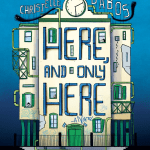
Vivid, Visceral, and Vulnerable: Christelle Dabos’ “Here, and Only Here,” Translated from French by Hildegarde Serle
The entire novel is permeated with a slimy quality, constantly infusing even unrelated passages with themes of the ever-present, stomach-churning schmoil. Dabos’ descriptions are vivid, often visceral and disgusting, which creates a greasy atmosphere in contrast to the vulnerability expressed by each narrator in this hostile school––a school actually based on Dabos’ own childhood school in the south of France, with prison-like architecture and filthy outdoor toilets.

Stransky & Starnone
Oonagh Stransky’s translation of Domenico Starnone’s monumental novel “The House on Via Gemito” (Europa Editions, 2023) is a tour de force. The vast, complex narrative comes to life in Stransky’s words, enabling in English Starnone’s profound investigation of a son’s relationship with his larger-than-life, exuberant, violent, irrepressible father. Longlisted for the 2024 International Booker Prize and shortlisted the 2024 Oxford-Weidenfeld Prize, Stransky’s translation deserves more attention.

Nothing Human is Alien in Savyon Liebrecht’s “The Bridesman,” translated from Hebrew by Gilah Kahn-Hoffman
The English title of Israeli author Savyon Liebrecht’s latest work, “The Bridesman,” translated by Gilah Kahn-Hoffman, is a clever rendering of the Hebrew term “shoshbeen,” denoting the close friend or relative of either sex who accompanies bride and groom (one each) to the wedding canopy. The book, set within an Iranian Jewish family in Israel at the end of the 20th century, revolves around the relationship of two young people. It ends in a startling reveal of abuse, paradoxically conducted in the name of family values.

The Provincial as Metaphor in Lorenza Pieri’s “Lesser Islands,” Translated from Italian by Peter DiGiovanni, William Greer, Donatella Melucci, Jenna Menta, Christopher Paniagua, and Kira Ross
Lorenza Pieri has created a world not quite our own and not quite foreign, and this is a testament to her talent as a writer. As readers we are all searching for something, whether it’s escape, enjoyment, information, or validation. “Lesser Islands” reminds us that even though we all suffer times of remoteness and provincialism, the opening of a book can be a magical way to connect without leaving the comfort of one’s chair.

When the going gets tough, Aeneas is your hero. Andrea Marcolongo’s “Starting From Scratch,” Translated from Italian by Will Schutt
The “Aeneid,” unfinished at the time of Virgil’s death, was published posthumously against his wish that it be destroyed. Undercurrents of fear and anxiety run deep within the text of the “Aeneid,” while on the surface, Virgil’s stylistically masterful composure, and the terse, concise elegance of his verses befit a hero who is steadfast, patient and enduring; who battles with foes and with his own emotions, but keeps his eyes on the prize, though there will be no prize for him. As she read it during the pandemic Andrea Marcolongo found the “Aeneid” “a brutally honest poem.” Four months of war in Ukraine make it almost recommended reading.

Keeping the Presence of Absence: Concita de Gregorio’s “The Missing Word,” Translated from Italian by Clarissa Botsford
The kidnapping of Livia and Alessia Schepp crossed Swiss airwaves in early 2011, circulating throughout Europe. The six-year-old twins had been picked up on January 30 by their father, Mathias, in order to spend the weekend with him. The girls never returned to their home in Saint-Sulpice, and Mathias committed suicide by train five days later at a train station in southeast Italy. The girls were never found, and the case still continues—full of speculation, false trails, and theories that have sprouted like weeds to fill every gap in the story.

Pains, Pens, and Poets: Elena Ferrante’s “In the Margins: On the Pleasures of Reading and Writing,” translated from Italian by Ann Goldstein
Part of what makes Ferrante’s work daring is her pursuit of a “female language,” nourished and emboldened by a female literary tradition, and capable of describing women’s experiences with truth and authenticity.

LITERARY REVOLT VS. IDEOLOGICAL FANATICISM: MOHAMED MBOUGAR SARR’S “BROTHERHOOD,” TRANSLATED BY ALEXIA TRIGO
In his debut novel “Brotherhood,” Mohamed Mbougar Sarr asks what happens when pervasive religious ideology is pitted against clandestine authorship. When society comes under the control of violent extremists, and the very act of composition becomes grounds for execution, how can one reconcile personal moral convictions against the drive to survive?

Gerda Taro’s Elusive Afterlives: Helena Janeczek’s “The Girl with the Leica,” Translated from Italian by Ann Goldstein
Pohorylle’s story is the inspiration for Helena Janeczek’s “The Girl with the Leica,” a complex, multivocal historical novel that is less a portrait of Gerda Taro than of her entire milieu: young, antifascist, bohemian, refugee, free-thinking, emancipated, and rife with short-lived romantic entanglements.

A Phone Call, and A Revelation: Sasha Naspini’s “Nives,” Translated by Clarissa Botsford
By Olivia Soule In Sacha Naspini’s Nives, translated from the Italian by Clarissa Botsford, the significance of the long phone call that lasts almost the entire novel creeps up on you. Towards the beginning, the elderly, eponymous widow calls the local veterinarian when one of her chickens has become frozen in place; this everyday conversation […]
On Being the Middle Voice: Maria Massucco Interviews Translator Clarissa Botsford
I find Botsford’s engaged and voice-driven translation style wonderfully refreshing and the diversity of her collaborations intriguing, so I was thrilled by the chance to talk with her about her recent work, her take on the Italian-English market, and her approach to the craft.

Join Us! Domenico Starnone in Conversation with Enrica Maria Ferrara and Stiliana Milkova
To celebrate both special issue “Reading Domenico Starnone” and the publication of Starnone’s latest novel in English, “Trust” (Europa Editions) translated by Pulitzer prize winner Jhumpa Lahiri, the Italian Cultural Institute in Dublin is hosting an online conversation with Domenico Starnone (in Italian with English translation), on 26 October 2021 at 6pm GMT (7pm in Italy), moderated by the editors of Reading Domenico Starnone.

“The Drinkers”: An Excerpt from Domenico Starnone’s “Via Gemito”
My position is all wrong. The water will forever spill onto the tomatoes, the plate, the cloth. My father placed me in a position where, even with Luigi reaching as far as he can, I will never be able to pour the water into his glass.

“Literature is the Sudden Disintegration of the Verbal Fabric of Everyday Life”: Domenico Starnone in Conversation with Enrica Maria Ferrara and Stiliana Milkova
I love the idea that the city we have left behind enshrines the ghost of the person we could have become, for better or worse, had we stayed there. And I am very fond of the idea that the ghost, which we consider part of us and therefore a friend, may turn out to be frightening or hostile.