
Category Interviews
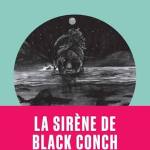
Translating “The Mermaid of Black Conch,” an interview with Gerty Dambury
Through this brief overview of Dambury’s work, I wish to show how her work operates at the intersection of linguistic, cultural and historical worldscapes, powerfully manifesting the archipelagic francospheres this issue seeks to amplify. And unsurprisingly, my conversation with Gerty Dambury about her translation of British-Trinidadian author Monique Roffey’s novel The Mermaid of Black Conch (2020), published in French by Montréal-based publisher Mémoires d’encrier in 2023 as La Sirène de Black Conch, centered on the challenges of rendering distinctive forms of speech, navigating complex identities, and creating spaces for linguistic, cultural and literary cross-pollination.

No Bridges at the Estuary: Giorgia Meriggi in Dialogue with Poet Franca Mancinelli and Translator John Taylor
This dialogue originated from my reading in August 2024 of Franca Mancinelli’s The Butterfly Cemetery, translated by John Taylor. Every day I put Franca’s collection of essays and narratives in my backpack and set off on long hikes in the high mountains.

She Who Translates: Stiliana Milkova Rousseva in Conversation with Translator and Writer Izidora Angel
Izidora Angel works magic with words. Her latest translation from Bulgarian, Rene Karabash’s “She Who Remains” (forthcoming from Sandorf Passage and Peirene Press in early 2026) ensnares you into a contemporary world of ancient patriarchal law and guides you through its perilous territory on an intense journey of identity (trans)formation, family commitment, and love. In this interview, Angel unravels some of the mysteries behind “She Who Remains,” discusses her choices and decisions as a translator, and hints at some of her own creative writing projects.

Tolstoy Would Be Absolutely Outraged: Olga Kenton in Conversation with Nicolas Pasternak Slater and Maya Slater on Translating “Anna Karenina”
Nicolas Pasternak-Slater and Maya Slater have recently completed their translation of one of Tolstoy’s best-known and most widely read novels, “Anna Karenina” (scheduled to be published in 2026 by the Folio Society). In this interview, Olga Kenton discusses with them the novel, obstacles that arose during the translation process, and the significance of engaging with Russian literature in the twenty-first century.
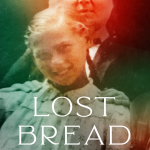
LONG, LONG AGO AND NOW: SASKIA ZIOLKOWSKI REVIEWS EDITH BRUCK’S “LOST BREAD” AND INTERVIEWS TRANSLATOR GABRIELLA ROMANI
“Lost Bread” represents multilingual worlds, with Hungarian, Yiddish, German, Russian, Hebrew, Arabic, French, and other languages woven into the narrative and author’s life. Both the Italian and English translation have footnotes for some of the phrases that appear. The narrator’s relationships to these languages evolve throughout the work.

A Voice Sufficiently “Raspy”: Anna Levett in Conversation with Translator Robyn Creswell
In November 2023, Robyn Creswell was awarded ALTA’s National Translation Award in Poetry for “The Threshold.” Nominally, this became the occasion for our interview, but as a longtime admirer of his work, I was excited to ask him not only about this collection, but about his broader philosophy and practice of translation.

Stransky & Starnone
Oonagh Stransky’s translation of Domenico Starnone’s monumental novel “The House on Via Gemito” (Europa Editions, 2023) is a tour de force. The vast, complex narrative comes to life in Stransky’s words, enabling in English Starnone’s profound investigation of a son’s relationship with his larger-than-life, exuberant, violent, irrepressible father. Longlisted for the 2024 International Booker Prize and shortlisted the 2024 Oxford-Weidenfeld Prize, Stransky’s translation deserves more attention.

A Renaissance Woman: In Conversation with Italian-Irish writer, scholar, and translator Enrica Ferrara
An Italian-Irish scholar, translator, teacher, and writer, Enrica Ferrara is a Renaissance woman. In this energetic conversation with Stiliana Milkova Rousseva, Enrica Ferrara recounts the story of her debut novel in Italian, “Mia madre aveva una cinquecento gialla” (Fazi, 2024), and discusses some of its major themes and plot elements.

Storybooks, Contemporary Artists, and Family Lexicons: An Interview with Gini Alhadeff
Gini Alhadeff is a prize-winning translator, curator, and author, including of fiction, with the novel “Diary of a Djinn,” and of non-fiction, with a multitude of articles and her memoir “The Sun at Midday: Tales of a Mediterranean Family.” She grew up in Egypt, Sudan, Italy, and Japan. She studied fine art and photography at Harrow in England and at Pratt Institute in New York. She recently translated Natalia Ginzburg’s “The Road to the City” for the distinctive series, Storybook ND, that she curates for New Directions. This interview was conducted over zoom on October 6th, 2023 with Gini Alhadeff in New York City and Saskia Ziolkowski in Durham, NC.

Narratives of Mistranslation: Elena Schafer In Conversation with Denise Kripper
While “translation fictions” are not exclusive to Latin American literature, I did find their publication to be very consistent and prominent in its contemporary production in Spanish, and I believe their portrayal of translation relates very much to this locus of enunciation. Fictional translators would tamper with meanings, deviate conversations, and produce miscommunication on purpose. Fictional translators would tamper with meanings, deviate conversations, and produce miscommunication on purpose. Translators are thought to be unbiased, faithful, a bridge between languages and cultures, right? But that’s not what I was finding in these books.

Crossing a Divide: In Conversation with Translator Brian Robert Moore
I was captivated by the story, the language, the setting of “Meeting in Positano.” Goliarda Sapienza is a superb narrator and the seaside town of Positano as the backdrop of her novel lends it a mythological, Mediterranean appeal. This appeal emerges and takes hold thanks to the book’s translator, Brian Robert Moore. Moore’s voice blends beautifully with the double voice of the book’s narrator who is telling her friend’s traumatic life story.

Narrating and Translating Love and Grief in “TI AMO”: Norwegian Author Hanne Ørstavik and English Translator Martin Aitken in Conversation with Nataliya Deleva
“Ti Amo” is a sensual and honest exploration of love, of the heavy feeling permeating the weeks and months before the impending death of a loved one, the memories that engulf you before the imminent parting.

In Conspiracy with Dante: Maria Massucco Interviews Translator Mary Jo Bang
To mark the occasion of the 700th anniversary of Dante’s death, Stanford Professor Robert Pogue Harrison and graduate student Donatella D’Aguanno orchestrated a panel that brought poet and translator Mary Jo Bang together in conversation with Emeritus Professor Marjorie Perloff. I saw the occasion as an opportunity to ask this most creative and skilled wordsmith a few questions about her process, her relationship to Dante, and her place in a long line of Dante translators.

A Band of Translators: In Conversation with the Turkoslavia Translation Collective
Collective of literary translators—Sabrina Jaszi, Mirgul Kali, and Ena Selimović—working from Turkic and Slavic languages. In this interview, the members of the collective discuss how they met, why they formed a translators’ collective, and their current projects.

On the Pleasures of Reading and Translating Women Writers: An Interview with Dorothy Potter Snyder
It is not for us as translators to smooth the way, to explain, or to make things easier for the English language reader. Translators have to trust that good readers will prefer to work a bit harder rather than be denied the chance to experience the writer’s voice as directly as possible.