
Tag Archives: NYRB
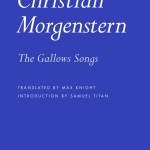
U-U-U: Christian Morgenstern’s “The Gallows Songs,” translated from German by Max Knight
One way to understand this project, then, is a childlike, though not childish, attack on an ossified adult language with its boredom and sterility (“call it infantile vendetta [Kinder-Rache] on life’s deeply serious aim,” to quote the titular poem [44]). By following puns to their ends or dead ends, letting rhymes and rhythms take language wherever it may go, Morgenstern injects an originary vitality into linguistic structures that have forgotten those other paths they could have taken.

The Bourgeois Shudder: Fantasy, Politics, Race
New York Review Books has been relaunching Dino Buzzati’s writing in English, bringing out new translations as well as reprints, and I am assembling a retrospective selection of fifty stories. The Italian texts pose unique challenges to a translator, partly because they were written some time ago (1930s-1970s), but also because the fantastic is perhaps the most subversive of narrative discourses, resistant to understanding, or indeed any form of interpretive control. It establishes an unreal world that disrupts dominant notions of what is real, making them seem variously unfamiliar, questionable, irrational – i.e., unreal in turn. Can this unsettling effect, I wonder, be recreated in a translation of Buzzati’s stories today, many decades after they were first published in Italian?
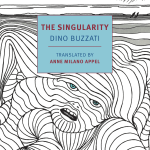
AI’s Future in the Past: Dino Buzzati’s “The Singularity,” Translated from Italian by Anne Milano Appel
Anne Milano Appel’s new translation of Dino Buzzati’s “The Singularity” is a timely translation: long considered one of the author’s minor works, Buzzati’s parable of artificial intelligence and the ethics of technology will resonate deeply with today’s readers.

A Most Intimate Fantasy: Marion Fayolle’s “The Tenderness of Stones,” Translated from French by Geoffrey Brock
By Neal Baker Across several graphic novels and two collections of wordless comics, Marion Fayolle has demonstrated her surreal imagination and her inclination toward visual comedy and metaphor. In The Tenderness of Stones, translated in English by Geoffrey Brock, she brings her practice to the personal. Written during and about the decline of her father’s […]