
Jennifer Boum Make & Gerty Dambury
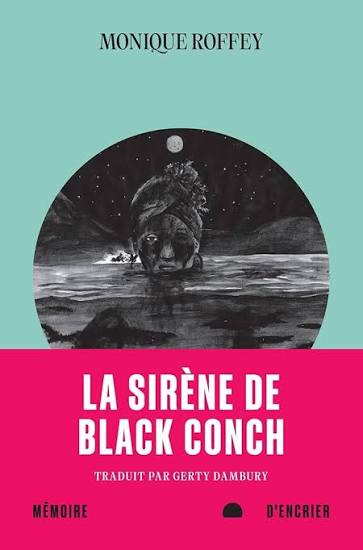
Ce numéro de Reading in Translation, intitulé “Archipelagic Francospheres: Transoceanic Dialogues Through Translation,” met au premier plan celles.ceux qui prêtent leur voix et leur plume à la circulation des expériences et des histoires entre les Francosphères, à travers les littératures des Caraïbes, de l’Océan Indien et du Pacifique.
L’écrivaine Gerty Dambury est l’une de ces voix. Elle est l’autrice de nombreuses pièces de théâtre, parmi lesquelles Trames (2012), publiée dans une édition trilingue en français, anglais et espagnol, Lettres indiennes / Crosscurrents, publiée dans une édition bilingue (2014), et La Radio des bonnes nouvelles (2018). Elle est également l’autrice de deux romans: Les Rétifs, publié en 2012 (et traduit par Judith G. Miller en 2018 sous le titre The Restless), et La Sérénade à Poinsettia (2016). Dambury est aussi traductrice. À travers ce bref aperçu de son œuvre, je souhaite montrer comment son travail se situe à l’intersection de divers mondes linguistiques, culturels et historiques, donnant une expression particulièrement forte aux Francosphères archipélagiques dont ce numéro cherche à amplifier le retentissement. Il n’est donc pas surprenant que mon entretien avec Gerty Dambury au sujet de sa traduction du roman de l’autrice britanno-trinidadienne Monique Roffey, The Mermaid of Black Conch (2020), publié en français en 2023 par la maison d’édition montréalaise Mémoires d’encrier sous le titre La Sirène de Black Conch, se soit concentré sur les défis que posent la restitution de formes de parole singulières, la navigation entre des identités complexes et la création d’espaces de fécondation linguistique, culturelle et littéraire réciproque.
Pour donner aux lecteurs.rices quelques éléments de contexte, The Mermaid of Black Conch se déroule principalement en 1976, sur l’île fictive de Black Conch. L’histoire est centrée sur Aycayia, une femme Taïno qui, maudite par des femmes jalouses de sa beauté et de l’effet qu’elle produisait sur les hommes, est transformée en sirène. Un jeune pêcheur, David Baptiste, la rencontre en mer et se fascine pour elle. Lorsqu’un groupe d’Américains capture Aycayia au cours d’une expédition de pêche, David la sauve et la cache chez lui. Alors qu’elle reprend progressivement forme humaine une fois revenue sur la terre ferme, un parcours d’apprentissage, de découverte et d’émerveillement se déploie pour Aycayia comme pour tous.tes ceux.celles qui croisent son chemin.
Tout au long de l’entretien, Gerty Dambury est désignée par les initiales G-D, et moi-même par J-BM.
This issue of Reading in Translation, “Archipelagic Francospheres: Transoceanic Dialogues Through Translation,” foregrounds those who lend their voices and their plumes to the circulation of experiences and histories between Francospheres, spanning the literatures of the Caribbean, Indian Ocean, and Pacific.
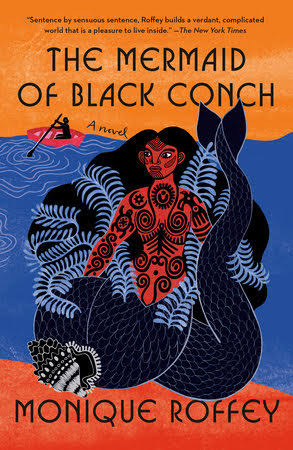
Writer Gerty Dambury is one such voice. She is the author of numerous plays, including Trames (2012), published in a trilingual edition in French, English, and Spanish, Lettres indiennes / Crosscurrents published in a bilingual edition (2014), and La Radio des bonnes nouvelles (2018). She is the author of two novels: Les Rétifs published in 2012 (and translated by Judith G. Miller in 2018 as The Restless) and La Sérénade à Poinsettia (2016). Dambury is also a translator. Through this brief overview of Dambury’s work, I wish to show how her work operates at the intersection of linguistic, cultural and historical worldscapes, powerfully manifesting the archipelagic francospheres this issue seeks to amplify. And unsurprisingly, my conversation with Gerty Dambury about her translation of British-Trinidadian author Monique Roffey’s novel The Mermaid of Black Conch (2020), published in French by Montréal-based publisher Mémoires d’encrier in 2023 as La Sirène de Black Conch, centered on the challenges of rendering distinctive forms of speech, navigating complex identities, and creating spaces for linguistic, cultural and literary cross-pollination.
By way of context for the readers, The Mermaid of Black Conch is set primarily in 1976 on the fictional island of Black Conch. The story centers on Aycayia, an Indigenous Taino woman who, cursed by jealous women for her beauty and the effect she had on men, was transformed into a mermaid. A young fisherman, David Baptiste, encounters her at sea and becomes captivated by her. When a group of Americans capture Aycayia during a fishing expedition, David rescues her and hides her in his home. As she gradually transforms back into a human woman on land, a journey of learning, discovery, and wonder unfolds for Aycayia and for all those who encounter her.
Throughout the interview, Gerty Dambury is identified as G-D and I as J-BM.
| J-BM: Pour commencer, pourriez-vous expliquer comment vous êtes parvenue à façonner le parler de Black Conch en français ? G-D: C’est très important de dire les différents parlers de Black Conch, parce qu’il n’y en a pas qu’un. Pour moi, ce qui était le plus frappant au départ, c’est le personnage de David Baptiste qui a un rythme bien à lui. Le fait de savoir qu’il fume de la ganja laisse entendre, à mes yeux, qu’il lui faudrait une sorte de “langue-ganja”: quelque chose qui balance, qui prend son temps, qui se répète. Plus généralement, ce travail a nécessité une approche théâtrale, qui consistait à trouver la voix de chaque personnage. Je les ai traités comme des personnages de théâtre. Chaque personnage a une identité linguistique, une manière de parler très particulière, soigneusement affirmée par l’autrice, et il fallait que je parvienne à préserver ces voix du début à la fin. Par exemple, il y a aussi la langue de Miss Rain, qui se débat avec le fait d’être blanche, mais une blanche de Trinidad. Sa langue va se heurter à celle des Américains, ce qui crée des frictions dans sa manière de parler. À d’autres moments, elle cherche à amener les autres, notamment son fils, vers un anglais standard. Il y a donc, dans le langage lui-même, des conflits intérieurs dont la traduction ne pouvait pas ne pas tenir compte. Et de même, puisque Aycayia et David ne se parlent pas au début, cela exige de la part de David une attention particulière à la manière dont Aycayia va exprimer ses désirs. Il doit être attentif à ses gestes, à ses regards, à tout ce qui lui permet de communiquer autrement que par les mots. C’est alors un langage supplémentaire qui se met en place, un langage qui passe par le corps et les signes. Reggie, le fils de Miss Rain, et Aycayia communiquent eux aussi à travers un langage qui leur est propre, qu’ils inventent ensemble. Cela pose sans cesse la question de la langue: a-t-on vraiment besoin des mots pour communiquer ? J-BM: Est-ce que vous avez retrouvé cette même pratique de l’attention et ce processus de négociation dans votre travail de traduction ? G-D: En le relisant aujourd’hui, il y a certainement des choses que je changerais. Mais, en même temps, je me battais contre une certaine tentation de poétisation. J’ai souvent constaté cela dans les traductions, notamment lorsqu’on fait appel au créole ou à un français créolisé: la langue tend à devenir boursouflée, comme si elle devait nécessairement être enrichie ou embellie. Je voulais, au contraire, parvenir à une matière dépouillée de tout cela, qui reste au plus près de la simplicité et de la force de la langue. J-BM: Et dans votre démarche, vous avez d’ailleurs fait le choix de ne pas inclure de note de traduction qui aurait permis de revenir sur ces choix et d’en expliciter les enjeux. G-D: Pas besoin. C’est toute la tragédie du·de la traducteur·trice, son invisibilité. Et pourtant, il y a aussi cette volonté de lutter contre ce qui est perçu comme une forme d’invisibilisation. Souvent, les traducteurs·trices aimeraient voir leur nom davantage mis en avant, qu’on parle de leur travail, qu’il y ait une petite note sur leur démarche, voire qu’ils puissent rédiger une préface ou une postface. Mais, en réalité, ce n’est pas leur texte. C’est le texte de quelqu’un d’autre. Le·la traducteur·trice lui apporte un éclairage dans une autre langue. Son travail n’est pas d’analyser le texte, mais de le faire entendre dans une autre langue, de sorte que ce que l’auteur ou l’autrice d’origine a voulu dire puisse parvenir au lecteur. J-BM: C’est notamment en donnant un éclairage à une littérature, à une voix littéraire, à une histoire, qu’on voit aussi les manières dont des sociétés peuvent être rapprochées autour de questions telles que le colorisme, les violences racistes et raciales, coloniales et impérialistes. On peut ainsi très facilement mettre ce texte en dialogue avec un corpus de littérature caribéenne francophone. G-D: En fait, ce qui est essentiel ici, c’est la réappropriation d’une voix, la possibilité d’exprimer qui l’on est. C’est l’une des questions centrales des littératures de la Caraïbe. Les langues que nous parlons ne sont pas simplement les langues que nous avons apprises. Nous avons appris le français, certes, mais nous en avons fait autre chose; de même avec l’anglais: nous avons fait autre chose de l’anglais, et pareil pour l’espagnol. Je connais moins les créoles, comme le papiamento ou le néerlandais, donc je ne saurais pas dire ce que cela donne dans ces contextes, mais il est très intéressant de réaffirmer cette question du langage. Elle ne se pose pas tout à fait de la même manière pour un auteur africain, par exemple, parce que nous, dans la Caraïbe, n’avons pas nécessairement de langue de départ. Nous partons, d’une certaine manière, de rien. C’est aussi ce qui rend le personnage d’Aycayia si important: elle apporte sans doute ce dont tout·e auteur·trice caribéen·ne a rêvé, à un moment ou à un autre, à savoir le mythe, et la possibilité de retrouver, à travers lui, une langue qui aurait disparu. Elle canalise tous ces désirs de retrouver une identité détruite, et elle joue ce rôle non seulement du point de vue de la langue, mais aussi de la culture et de l’histoire. J-BM: Pourriez-vous commenter le fait de rendre accessible à un lectorat francophone un roman qui ose l’intime, la fragilité et la vulnérabilité dans la représentation des masculinités, et de le faire dialoguer avec le corpus des littératures caribéennes francophones ? G-D: Il existe déjà un très beau texte sur la fragilité, l’intime, et la masculinité positive, qui, à mon avis, n’a pas été suffisamment diffusé, Ton Beau capitaine (1987), de Simone Schwarz-Bart. Moi, j’ai aussi essayé d’aborder cette question de la fragilité dans les deux romans que j’ai écrits: Les Rétifs, où je donne la parole à un homme qui est makoumè, comme on dit chez nous, c’est-à-dire homosexuel, et qui se pend parce qu’il est poursuivi et chassé dans son école. Et dans La Sérénade à Poinsettia également, où il y a un homme qui, dès le départ, donne à voir l’amour qu’il éprouve pour une femme et la fragilité que cet amour entraîne chez lui. Alors, concernant le roman de Monique Roffey, même si je n’ai pas lu beaucoup de ses ouvrages, j’ai lu pas mal de ses interviews pour essayer de comprendre où elle allait. C’est une question qui semble importante pour elle: celle du rapport entre les hommes et les femmes, des rapports de domination dans lesquels on peut se retrouver en tant que femme face à un homme, etc. Et je trouve qu’elle a réussi, dans La Sirène de Black Conch, à aborder ces questions sans en faire un porte-drapeau. Elle donne à voir les hommes tels qu’ils peuvent être, tels qu’ils peuvent exister, et les femmes telles qu’elles peuvent être. Par exemple, elle montre aussi que les femmes peuvent faire du mal à d’autres femmes. Il y a donc quelque chose qui ne relève pas seulement, chez elle, d’une réflexion sur la masculinité positive, mais plutôt d’une volonté de donner à voir la complexité des rapports de genre, y compris à l’intérieur même des genres. Après, elle ne sort pas tellement du schéma homme-femme. On pourrait multiplier les possibles, ce qu’elle n’a pas fait. Et pour moi, si la masculinité positive est importante, si le fait que les hommes changent est important, il est encore plus important que, chez nous, on accepte la multiplicité des genres et des sexualités. J-BM Je vous propose maintenant de réfléchir à partir des thèmes et notions qui structurent ce numéro spécial, notamment les “francosphères archipélagiques” et le “transocéanique.” Envisagez-vous, à travers la lecture et la traduction de The Mermaid of Black Conch, une forme de dialogue transocéanique, c’est-à-dire une manière de décloisonner et de rapprocher des territoires et des histoires qui présentent des similarités, mais qui n’entrent pas toujours nécessairement en contact ? G-D: Le désir même de faire traduire un ouvrage est déjà une manière de décloisonner. Pour ma part, je suis absolument passionnée par cette idée. J’ai inventé le concept du “Séna” il y a quatorze ans maintenant. Historiquement, c’était le lieu où nos pères–pas nos mères puisqu’elles ne sortaient pas–se retrouvaient pour parler entre eux. C’était déjà une manière de s’approprier un espace politique de décision. J’ai donc repris le terme “Sénat” pour inviter le public à s’exprimer autour de thématiques traversées par les littératures caribéennes. Ce sont des comédiens et des comédiennes qui lisent ou jouent des extraits de textes de la Caraïbe dans toutes les langues de la région: en français, en anglais, en créole, en espagnol. Prenons, par exemple, la thématique du marronnage. Cela permet d’explorer la manière dont cette question est traitée à Cuba, en République dominicaine, à Puerto Rico, à Trinidad, en Haïti, en Guadeloupe ou en Martinique. Pendant deux, voire trois heures, nous faisons le tour de cette question du marronnage à la lumière des textes qui sont partagés. La première chose, c’est donc d’amener les gens à écouter des textes dans des langues qu’ils ne comprennent pas. On est d’accord ou pas, on comprend ou pas, mais au bout du compte, on réalise que, sur un même sujet, il existe une littérature qui entre en résonance avec une littérature écrite dans une langue que l’on comprend. C’est une première étape. La deuxième, c’est que, parfois, lorsqu’un texte nous touche particulièrement, nous le traduisons. Il nous arrive ainsi d’avoir un même texte dans trois langues: quelqu’un le traduit en créole, quelqu’un d’autre en français, etc. Et pour revenir au terme “transocéanique,” j’aimerais évoquer Kamau Brathwaite, qui disait “nous sommes un continent,” et Derek Walcott, avec “The Sea is history.” Cela signifie que c’est de mer en mer, et sous la mer, que se forme ce continent, cette espèce de continuum que l’on retrouve dans la littérature, la poésie, le cinéma, l’architecture, les manières de danser, les robes folkloriques, etc. C’est extraordinaire. Le transocéanique existe depuis longtemps déjà: les auteurs, les écrivains, les poètes, les musiciens et bien d’autres n’ont cessé de chercher à le formuler. J-BM: C’est une démarche que l’on pourrait finalement rapprocher d’Aycayia, qui surgit de la mer pour faire émerger une histoire, un passé. Elle nous permet, d’une certaine manière, de percevoir ce continuum qui n’est pas toujours immédiatement discernable. G-D: Le transocéanique est là. Il a été pensé dès les années 1960, puis, bon, on en a moins parlé pendant un temps. Il y a eu, par exemple, sur le plan culturel, des initiatives comme Carifesta, qui visaient à rassembler tous ces pays et toutes ces cultures caribéennes. J-BM: Pourriez-vous citer un passage du texte qui vous a particulièrement marquée et expliquer pourquoi ? G-D: Je choisirais la toute fin, “L’après Rosamund,” après le passage de l’ouragan. C’est un passage absolument magnifique du point de vue de l’écriture. D’abord, en le traduisant, j’ai vraiment pris mon pied: j’ai beaucoup aimé travailler sur cette partie. J’ai aimé la traduire parce que je trouve qu’elle est dans le mouvement. Le souffle du cyclone est dans le texte, et il s’agit donc de retrouver la force des mots, la force des vents, de traduire les peurs. C’est aussi un passage où le transocéanique est présent à travers le cyclone, qui nous est commun dans la Caraïbe: ce que sont les cyclones et ce qu’ils nous font. Je pense notamment au moment où les personnages sont dans le sous-sol de la maison de Miss Rain, confinés ensemble, entendant le vent et se protégeant mutuellement. C’est aussi l’un de mes souvenirs d’enfance, quand j’avais huit ou neuf ans. Il y a ce chaos absolu à l’extérieur et, en même temps, la solidarité à l’intérieur. Et cela est très bien rendu dans le roman, ce qui m’a particulièrement touchée. C’est aussi, en permanence, le calme au sein du chaos. Dans le cyclone lui-même, il y a un lieu de calme. Et l’endroit où c’est le plus calme est aussi celui où c’est le plus dangereux, ce que je trouve formidable d’un point de vue physique. Cela doit nous bousculer dans notre manière de penser ce qui nous entoure. Dans le roman, ce cyclone-là, en particulier, a pour fonction de remonter dans le temps, de permettre au personnage d’Aycayia de reprendre contact avec là d’où elle vient, mais à travers elle, nous aussi, on doit reprendre contact avec là d’où on vient. Le cyclone fait remonter une histoire qui nous habite, mais qui, en même temps, nous oblige à penser le futur. Que reconstruire ? À partir de quoi ? Et comment reconstruire ? Ce sont des questions qui traversent finalement tout le roman. C’est comme si on nous passait la balle en nous demandant: qu’est-ce que tu vas en faire ? J-BM: On se trouve finalement dans une sorte de temps suspendu, pour nous, lecteurs et lectrices, mais aussi pour vous, en tant que traductrice. En traduisant, vous participez vous aussi à construire l’après du texte. Traduire, n’est-ce pas, d’une certaine manière, contribuer à ce qui vient après le texte, à la manière dont il continuera à circuler et à être lu ? G-D: Oui, c’est vrai. | J-BM: To begin, could you explain how you came to give shape to the Black Conch’s way of speaking in French? G-D: It is very important to speak of the different ways of speaking in Black Conch, because there is not just one. For me, what was most striking at first was the character of David Baptiste, who has a rhythm of his own. The fact that we know he smokes ganja suggests to me that he would need a kind of “ganja language”: something that sways, takes its time, and repeats itself. More generally, this work required a theatrical approach, one that involved finding each character’s voice. I treated them like theater characters. Each character has a linguistic identity, a very particular way of speaking, carefully identified by the author, and I needed to find a way to preserve these voices from start to finish. For example, there is also Miss Rain’s language who struggles with the fact of being white, but a white woman from Trinidad. Her language clashes with that of the Americans, which creates friction in the way she speaks. At other times, she tries to steer others, particularly her son, toward standard English. So there are, within the language itself, inner conflicts that the translation could not fail to take into account. Likewise, since Aycayia and David do not speak to each other at first, David must pay particular attention to the ways in which Aycayia expresses her desires. He has to pay attention to her gestures, her looks, and everything that allows her to communicate in ways other than through words. An additional language thus takes shape, a language that passes through the body and through signs. Reggie, Miss Rain’s son, and Aycayia also communicate through a language of their own, one that they invent together. This constantly raises the question of language itself: do we really need words in order to communicate? J-BM: Did you find this same practice of attentiveness and this process of negotiation in translating this novel? G-D: Reading it again today, there are certainly things I would change. But at the same time, I was resisting a certain temptation toward poeticization. I have often noticed this in translations, particularly when Creole or Creolized French is used: the language tends to become bloated, as though it necessarily had to be enriched or embellished. On the contrary, I wanted to arrive at a stripped-down texture, remaining as close as possible to the simplicity and force of the language. J-BM: And in your approach, you also made the choice not to include a translator’s note that would have allowed you to revisit these choices and explain what was at stake in them G-D: There was no need for one. That is the whole tragedy of the translator: their invisibility. And yet there is also this desire to resist what is perceived as a form of erasure. Translators often wish their names were given greater prominence, that their work were discussed, that there were a brief note about their approach, or even that they could write a preface or afterword. But in reality, it is not their text. It is someone else’s text. The translator brings it into focus in another language. Their task is not to analyze the text, but to make it heard in another language, so that what the original author intended to say can reach the reader. J-BM: It is precisely by bringing to light a particular literature, a literary voice, and history that we can also see the ways in which societies can brought into dialogue around questions such as colorism, racist, racial, colonial and imperialist violence. In this way, this text can very easily be placed in dialogue with a body of Francophone Caribbean literature. G-D: Truly what is essential here is the reappropriation of a voice, the possibility of expressing who one is. This is one of the central questions of Caribbean literatures. The languages we speak are not simply the languages we have learned. We have certainly learned French but we made something else of it; the same is true for English: we made something else of English, and likewise for Spanish. I know less about the Creoles, such as Papiamento or Dutch, so I would not know what this looks like in those contexts, but it is very interesting to reaffirm this question of language. It does not arise quite the same way for an African author, for example, because we, in the Caribbean, do not necessarily have a language of origin. In a certain sense, we start from nothing. This is also what makes the character of Aycayia so important: she undoubtedly brings what every Caribbean author has dreamed of at one point or another, that is myth, and the possibility of recovering through it a language that has disappeared. She channels all these desires to recover a destroyed identity, and she plays this role not only from the perspective of language, but also of culture and history. J-BM: Could you comment on the significance to make accessible to a Francophone readership a novel that dares to explore intimacy, fragility and vulnerability in the representation of masculinities, and of bringing it in conversation with the corpus of Francophone Caribbean literatures? G-D: There is already a beautiful text about fragility, intimacy, and positive masculinity that, in my opinion, has not been circulated widely enough: Ton Beau capitaine (1987), by Simone Schwarz-Bart. I also tried to address this question of fragility in the two novels I have written: Les Rétifs, in which I give voice to a man who is makoumè, as we say where I come from, meaning gay, and who hangs himself because he is persecuted and driven out of his school. And also in La Sérénade à Poinsettia, where there is a man who, from the very beginning, reveals the love he feels for a woman and the vulnerability that this love brings out in him. As for Monique Roffey’s novel, even though I have not read many of her novels, I read quite a few of her interviews in an attempt to understand where she was coming from. This seems to be an important question for her: the relationship between men and women, the power dynamics in which one can find oneself as a woman in relation to a man, etc. And I think she succeeded, in The Mermaid of Black Conch, in addressing these questions without turning them into a torch-bearer. She shows men as they can be, as they can exist, and women as they can be. For example, she also shows that women can hurt other women. So for her, this is not simply a reflection on positive masculinity, but rather a desire to reveal the complexity of gender relations, including within genders themselves. That said, she does not move very far beyond the male-female binary. One could multiply the possibilities, which she has not done. And for me, while positive masculinity is important, and while it is important for men to change, it is even more important that, in our communities, we accept the multiplicity of genders and sexualities. J-BM: Now I would like to invite you to reflect on the themes and concepts that structure this special issue, particularly “archipelagic Francospheres” and the “transoceanic.” Do you see, through the reading and translation of The Mermaid of Black Conch, a form of transoceanic dialogue, that is a way of breaking down boundaries and bringing closer together territories and histories that share similarities but do not necessarily always come into contact with one another? G-D: The very desire to have a work translated is already a way of breaking down boundaries. For my part, I am absolutely passionate about this idea. I invented the concept of the “Séna” [The Senate] fourteen years ago now. Historically, it was a place where our fathers—not our mothers, since they did not go out—would gather to talk among themselves. It was already a way of claiming a political space for decision-making. So I took up the term “Sénat” and used it to invite the public to express themselves around themes explored in Caribbean literatures. Actors and actresses read or perform excerpts from Caribbean texts in all the languages of the region: French, English, Creole, and Spanish. Take, for example, the theme of marronnage. This allows us to explore how this question is addressed in Cuba, the Dominican Republic, Puerto Rico, Trinidad, Haiti, Guadeloupe, or Martinique. For two or three hours, we explore the question of marronnage through the texts that are shared. The first thing, then, is to encourage people to listen to texts in languages they do not understand. We may agree or disagree, understand or not understand, but ultimately, we realize that, on a given subject, there is a body of literature that resonates with literature written in a language we do understand. That is the first step. The second is that sometimes, when a particular text moves us deeply, we translate it. So it happens that we have the same text in three languages: someone translates it into Creole, someone else into French, etc. And to return to the term “transoceanic,” I would like to mention Kamau Brathwaite who said, “we are one continent,” and Derek Walcott, with “The Sea is History.” This means that it is from sea to sea, and beneath the sea, that this continent is formed, this kind of continuum that we find in literature, poetry, cinema, architecture, ways of dancing, traditional dresses, and so on. It is extraordinary. The transoceanic has existed for a long time already: authors, writers, poets, musicians, and many others have continually sought to formulate it. J-BM: This is an approach that we could ultimately associate with Aycayia, who emerges from the sea to bring a history, a past, to the surface. In a way, she allows us to perceive this continuum that is not always immediately discernible. G-D: The transoceanic is there. It was already being theorized in the 1960s, and then, well, there was less discussion of it for a while. There were, for example, cultural initiatives such as Carifesta, which sought to bring together all these Caribbean countries and cultures. J-BM: Could you cite a passage from the text that particularly stayed with you and explain why? G-D: I would choose the very end, “After Rosamund,” following the hurricane. This passage is absolutely magnificent from a writing perspective. First of all, translating it was a real joy: I really loved working on this part. I enjoyed translating it because I feel like it is in motion. The breath of the cyclone is in the text, and so the task is to recapture the force of the words, the force of the winds, and to translate the fears. It is also a passage in which the transoceanic is present through the cyclone, something we share across the Caribbean: what cyclones are and what they do to us. I am thinking in particular of the moment when the characters are in the basement of Miss Rain’s house, confined together, listening to the wind and protecting one another. This is also one of my childhood memories, from when I was eight or nine years old. There is this absolute chaos outside and, at the same time, solidarity inside. And this is rendered so beautifully in the novel, which particularly moved me. It is also, throughout, a sense of calm within the chaos. Within the cyclone itself, there is a place of calm. And the place where it is calmest is also the most dangerous, which I find extraordinary from a physical standpoint. It should unsettle the way we think about what surrounds us. In the novel, this particular cyclone serves to go back in time, allowing Aycayia to reconnect with where she comes from; but through her, we too are called to reconnect with where we come from. The cyclone brings to the surface a history that lives within us, but that, at the same time, forces us to think about the future. What should we rebuild? From what? And how should we rebuild? These are questions that ultimately run throughout the entire novel. It is as though someone were passing the ball to us and asking: what are you going to do with it? J-BM: We ultimately find ourselves in a kind of suspended time, for us as readers, but also for you as a translator. In translating, you too participate in constructing what comes after the text. Isn’t translation a way of contributing to what comes after the text, to the ways in which it will continue to circulate and be read? G-D: Yes, that’s true. |
Jennifer Boum Make is associate professor in the Department of French and Francophone Studies at Georgetown University. She is the author of Decolonial Care: Reimagining Caregiving in the French Caribbean (Rutgers University Press, 2025). She is the co-editor of Graphic Narratives of Resistance: Advocating for Representation and Social Justice in French-language Bandes Dessinées (Edinburgh University Press, 2025).
Gerty Dambury is a writer, translator, educator and theatre director from Guadeloupe. She is the author of numerous plays, including Trames (2012), Lettres Indiennes / Crosscurrents (2014), and La Radio des bonnes nouvelles (2018). She is also the author of two novels: Les Rétifs (2012) and La Sérénade à Poinsettia (2016). Since 2012, she has hosted the Séna.