
Author Archives: Nathan H Dize
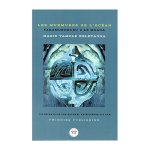
Selected Poems from Marie Keletaona Tamole’s Les Murmures de l’océan / Fakamusumusu o le moana / (The Ocean’s Whisperings), Translated by Jean Anderson
Jean Anderson translates selected poems from Marie Keletaona Tamole’s collection Les Murmures de l’océan / Fakamusumusu o le moana / (The Ocean’s Whisperings) in homage to her natal island, Futuna.

Selections from Chloé Savoie-Bernard’s “Sainte Chloé de l’amour” (Saint Chloé of Love), translated with a note by Violet E. Cooper
Violet E. Cooper translates selections from Chloé Savoie-Bernard’s 2021 collection of poetry “Sainte Chloé de l’amour” (Saint Chloé of Love), presenting a cosmos of dualities in verse.
From Ocean to Ocean, a Translator’s Note by Jean Anderson
Jean Anderson offers a reflection on her translations of Marie Tamole Keletaona’s poetry in memory of her home island of Futuna.

Expanding Translation Routes in the Caribbean: Music, Memory, and the Sea in Alecia McKenzie’s “Marins désarmés/Unarmed Mariners” and Daniel Thaly’s “Looting Hummingbirds”
The recent publication of Jamaican writer Alecia McKenzie’s Marins désarmés/Unarmed Mariners (Vieux-Habitants, Guadeloupe: Atlantiques déchaînés, 2025) alongside Dominican poet Daniel Thaly’s Looting Hummingbirds (London & Trafalgar, Dominica: Papillote Press, 2026) offers an opportunity to reflect on contemporary Caribbean poetry’s engagements with mobility, memory, and translation. While distinct in form and emphasis, both collections are bilingual, pairing each source text with a parallel translation: McKenzie’s collection presents English poems alongside French translations by C. and S. Renard, whereas Thaly’s selected poems present French texts alongside English translations by Mark Andrews and Lizabeth Paravisini-Gebert, who also co-edited the volume.
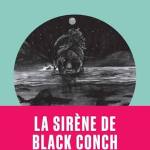
Translating “The Mermaid of Black Conch,” an interview with Gerty Dambury
Through this brief overview of Dambury’s work, I wish to show how her work operates at the intersection of linguistic, cultural and historical worldscapes, powerfully manifesting the archipelagic francospheres this issue seeks to amplify. And unsurprisingly, my conversation with Gerty Dambury about her translation of British-Trinidadian author Monique Roffey’s novel The Mermaid of Black Conch (2020), published in French by Montréal-based publisher Mémoires d’encrier in 2023 as La Sirène de Black Conch, centered on the challenges of rendering distinctive forms of speech, navigating complex identities, and creating spaces for linguistic, cultural and literary cross-pollination.

“The Word Became Flesh” a short story by Nathalie Hermine, Translated by Karen Fleetwood & Laëtitia Saint-Loubert
“The Word Became Flesh” is a short story by Reunionese writer Nathalie Hermine, originally published in French as “La vie se fît chair,” and translated into English by Karen Fleetwood and Laëtitia Saint-Loubert.
Translation as Excavation, A Translators’ Note
Contemporary Reunionese literature remains significantly underrepresented in the English-speaking literary world.[1] This observation informed our decision to translate Nathalie Hermine’s ‘Le verbe se fit chair,’ from her collection Ma plus grande douleur sera de ne pouvoir te secourir (Saint-Denis de La Réunion: Éditions Poisson Rouge, 2021), for the present special issue, as part of a broader translation dynamic that seeks to contribute to the greater visibility and circulation of Reunionese writing beyond its original linguistic and geographical contexts.[2] This project follows two other recent collaborative translations of Reunionese novels – the translation, for the Irish and UK markets, of Gaëlle Bélem’s first two novels, There’s a Monster Behind the Door (Sligo: Bullaun Press, 2024) and The Rarest Fruit (Sligo: Bullaun Press, 2025) – which similarly aimed to participate in expanding the reach of these works and fostering new encounters between Reunionese literature and international readers.
A Bi-lingual Review of “Non-noyées (Undrowned)” by Alexis Pauline Gumbs in French Translation
Published in the United States in 2020, Undrowned: Black Feminist Lessons from Marine Mammals is the work of Alexis Pauline Gumbs, author, poet, independent scholar and Afro-feminist activist whose work exists at the crossroad between decolonial ecology, critical theory and collective care. Undrowned presents itself as a hybrid and innovative blend of poetry, marine biology, and political meditation in which Gumbs explores the notions of survival, collective care, and liberation. The text brings together climate justice, feminine experience, the human condition and more largely the mammal experience. Breathing appears simultaneously as a physiological necessity and antiracial and anticolonial praxis.

Translator Allison M. Charette in Conversation with Michèle Rakotoson
In this conversation, translator Allison M. Charette discusses Malagasy literature with author Michèle Rakotoson.
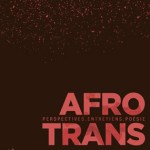
A Review of “AfroTrans: Perspectives. Entretiens. Poésie. Fiction”
As the title indicates, this rich volume is entirely devoted to Afrodiasporic transgender experiences, but editor and contributor Michaëla Danjé specifies that it does not seek to construct a new, normative, monolithic, inalienable identity category. In fact, the Trans in AfroTrans is capacious and fluid enough to welcome transformation, transmigration, transoceanicity, and, germane to this special issue, translation. Conceived as an open space for trans artists, activists, and intellectuals from all corners of the African diaspora to constitute, bear witness to, and preserve their own archive, the volume organically stretches out like an archipelagic community with submarine ties connecting the Atlantic and Indian Oceans.

Coral Relation: Reading translated excerpts from Denis Pourawa’s “Our Coral Soul”
Denis Pourawa is a Kanak (Indigenous) writer born in 1974 in Nouméa, the capital city of Kanaky/New Caledonia, a French-speaking archipelago situated close to Aotearoa/New Zealand and Australia in the Pacific Ocean. In 2003, he wrote his first children’s book; since, he has published (and performed) in a variety of literary genres, including poetry, theatre, short essays, and slam poetry. A member of the Mérénémé tribe, Pourawa’s work is influenced by his childhood memories, Kanak tradition, and his first encounter with “occidental thinking” through literature, which encouraged him to dedicate his life to the arts.

‘Archipelagic Francospheres: Transoceanic Dialogues Through Translation’ an Interview with Ananda Devi
My first experience in literary translation was when I was asked by Dapper publications to translate The Counting House, a novel by the Guyanese writer, David Dabydeen, into French. It is a very powerful novel about a country with a colonial history very similar to that of Mauritius, despite the discrepancy in size between the two countries. I therefore understood it at a very deep level and was fascinated by the choices David made in telling that story. But when I came to the final part of the novel, written entirely in Guyanese English, I realized that this represented an almost incommensurable challenge: Guyanese English, despite having its own specificity, was understandable to anglophone readers, perhaps in the same way that Salman Rushdie’s Hinglish passages were.