
Category Italian

Reading Natalia Ginzburg in the Twenty-First Century
The increased visibility of Natalia Ginzburg’s translated works and renewed engagement with her literary production speak to the traumatic realism of our own historical moment as we look for modes of resistance and survival. Ginzburg’s works, generated in part from the traumatic events that marked her own life, narrate in turn the minor and major hardships of human existence.
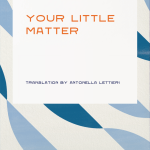
An Act of Love and a Restitution: Maria Grazia Calandrone’s “Your Little Matter,” translated from Italian by Antonella Lettieri
The memoir “Dove non mi hai portata” by multi-awarded poet and journalist Maria Grazia Calandrone was published in Italy in 2022 to huge public and critical acclaim. A finalist for the 2023 Strega Prize, now translated into English by Antonella Lettieri as “Your Little Matter” for Foundry Editions, this book is a restitution. This is the first information we learn as we dwell over the book’s threshold and read its epigraph: “All I have seen of you, to you I return, loved.”
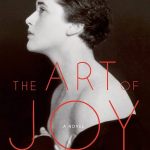
Bringing “The Art of Joy” to English Readers
For me, translating this book, in which dialect plays such an integral role, was a continuation of my ongoing nurturing of my Sicilian roots. From the time I first visited Sicily, slept in the room where my maternal nonna Biagina did as a girl, and delighted in the fragrance of jasmine wafting from the terrazza outside her window, Sicily, its scents, flavors, rituals and ways have been formative. So it was not surprising that one of the first choices I made when I began translating the book, was to leave as much of the dialect in there as I could without rendering the text illegible to English readers.
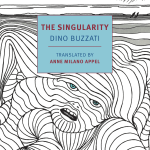
AI’s Future in the Past: Dino Buzzati’s “The Singularity,” Translated from Italian by Anne Milano Appel
Anne Milano Appel’s new translation of Dino Buzzati’s “The Singularity” is a timely translation: long considered one of the author’s minor works, Buzzati’s parable of artificial intelligence and the ethics of technology will resonate deeply with today’s readers.

Stransky & Starnone
Oonagh Stransky’s translation of Domenico Starnone’s monumental novel “The House on Via Gemito” (Europa Editions, 2023) is a tour de force. The vast, complex narrative comes to life in Stransky’s words, enabling in English Starnone’s profound investigation of a son’s relationship with his larger-than-life, exuberant, violent, irrepressible father. Longlisted for the 2024 International Booker Prize and shortlisted the 2024 Oxford-Weidenfeld Prize, Stransky’s translation deserves more attention.
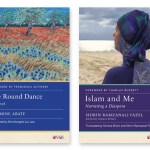
Creating An Alternative Canon in Translation
The one thing all OVOI translated books have in common is their origin from the margins, either because their authors are exophonic and transnational and have been neglected by mainstream Italian criticism, because the texts deal with problematic themes, or because existing translations do them no justice. Several of the authors we publish for the first time in English are displaced people and a lot of them are women. Some of the stories the books narrate are about gender, sexuality, racial and class discrimination, testimonies of marginalization and abuse.

A Renaissance Woman: In Conversation with Italian-Irish writer, scholar, and translator Enrica Ferrara
An Italian-Irish scholar, translator, teacher, and writer, Enrica Ferrara is a Renaissance woman. In this energetic conversation with Stiliana Milkova Rousseva, Enrica Ferrara recounts the story of her debut novel in Italian, “Mia madre aveva una cinquecento gialla” (Fazi, 2024), and discusses some of its major themes and plot elements.

The Afterlives of Natalia Ginzburg’s “The Road to the City”
A new translation of “The Road to the City” (New Directions, 2023) extends the book’s afterlife and illuminates Ginzburg’s distinctive style. The translator, Gini Alhadeff, gives in to Ginzburg’s spare and concise narration without ever losing sight of the novella’s subtle meaning making.
Storybooks, Contemporary Artists, and Family Lexicons: An Interview with Gini Alhadeff
Gini Alhadeff is a prize-winning translator, curator, and author, including of fiction, with the novel “Diary of a Djinn,” and of non-fiction, with a multitude of articles and her memoir “The Sun at Midday: Tales of a Mediterranean Family.” She grew up in Egypt, Sudan, Italy, and Japan. She studied fine art and photography at Harrow in England and at Pratt Institute in New York. She recently translated Natalia Ginzburg’s “The Road to the City” for the distinctive series, Storybook ND, that she curates for New Directions. This interview was conducted over zoom on October 6th, 2023 with Gini Alhadeff in New York City and Saskia Ziolkowski in Durham, NC.

The Provincial as Metaphor in Lorenza Pieri’s “Lesser Islands,” Translated from Italian by Peter DiGiovanni, William Greer, Donatella Melucci, Jenna Menta, Christopher Paniagua, and Kira Ross
Lorenza Pieri has created a world not quite our own and not quite foreign, and this is a testament to her talent as a writer. As readers we are all searching for something, whether it’s escape, enjoyment, information, or validation. “Lesser Islands” reminds us that even though we all suffer times of remoteness and provincialism, the opening of a book can be a magical way to connect without leaving the comfort of one’s chair.

Translators on Books that Should be Translated: Francesca Melandri’s “Sangue Giusto”
Vivid, absorbing, and historically grounded without being pedantic, ‘Sangue Giusto’ raises questions such as these: How much can we know about how our parents lived before we were born? Can we square the mythologies about those we love with the reality of who they are? How far can we go to fill those gaps? And are we the inheritors of the violence committed by those with whom we share blood?

Crossing a Divide: In Conversation with Translator Brian Robert Moore
I was captivated by the story, the language, the setting of “Meeting in Positano.” Goliarda Sapienza is a superb narrator and the seaside town of Positano as the backdrop of her novel lends it a mythological, Mediterranean appeal. This appeal emerges and takes hold thanks to the book’s translator, Brian Robert Moore. Moore’s voice blends beautifully with the double voice of the book’s narrator who is telling her friend’s traumatic life story.

A Mythographer of Modernity: Giovanni Pascoli’s “Convivial Poems,” Translated from Italian by James Ackhurst and Elena Borelli
Borelli and Ackhurst are faced with the daunting assignment of translating Pascoli’s somewhat paradoxical modernist classicism, written in a literary language that is both simple and sophisticated, archaicizing, and yet fresh and innovative. They succeed admirably in their task, adopting a thoughtful translation strategy that successfully delivers Pascoli’s poetic idiom in all its musical crispness and evocative force.

Geographies of Family Memory and Belonging: Marina Jarre’s “Return to Latvia,” Translated from Italian by Ann Goldstein
The case of the Italian author Marina Jarre (1925-2016) is unusual for the international literary market: her works are being simultaneously rediscovered in Italy and discovered in English translation. Jarre’s recently republished autobiography “I padri lontani” (1987, 2021) and its English translation “Distant Fathers” (2021) by Ann Goldstein have attracted wide attention.

When the going gets tough, Aeneas is your hero. Andrea Marcolongo’s “Starting From Scratch,” Translated from Italian by Will Schutt
The “Aeneid,” unfinished at the time of Virgil’s death, was published posthumously against his wish that it be destroyed. Undercurrents of fear and anxiety run deep within the text of the “Aeneid,” while on the surface, Virgil’s stylistically masterful composure, and the terse, concise elegance of his verses befit a hero who is steadfast, patient and enduring; who battles with foes and with his own emotions, but keeps his eyes on the prize, though there will be no prize for him. As she read it during the pandemic Andrea Marcolongo found the “Aeneid” “a brutally honest poem.” Four months of war in Ukraine make it almost recommended reading.