
Category Italian
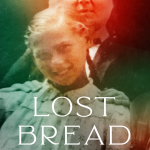
LONG, LONG AGO AND NOW: SASKIA ZIOLKOWSKI REVIEWS EDITH BRUCK’S “LOST BREAD” AND INTERVIEWS TRANSLATOR GABRIELLA ROMANI
“Lost Bread” represents multilingual worlds, with Hungarian, Yiddish, German, Russian, Hebrew, Arabic, French, and other languages woven into the narrative and author’s life. Both the Italian and English translation have footnotes for some of the phrases that appear. The narrator’s relationships to these languages evolve throughout the work.
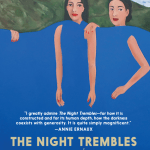
The Novel as Oracle and the Voice of Women Writers: Nadia Terranova’s “The Night Trembles,” Translated from Italian by Ann Goldstein
Nadia Terranova’s 2022 novel “The Night Trembles” (Trema la notte), translated in English by Ann Goldstein for Seven Stories Press (2025), gives voice to Barbara and Nicola, a young woman and a boy whose parallel plot lines develop against the background of a catastrophic natural disaster – the earthquake that decimated the cities of Messina and Reggio Calabria, on each side of the Strait of Messina, on December 28, 1908. Terranova, a contemporary Italian writer from Messina, has been mapping in her narratives the topographies of trauma – personal and collective – of her hometown and her native Sicily.

Where We Begin: Alba De Céspedes’ “There’s No Turning Back,” Translated from Italian by Ann Goldstein
“There’s No Turning Back” is an interesting early novel, and if one reads carefully one can detect the ways in which De Céspedes is searching for a voice. This is not to say that the novel is flawed, or even disappointing as an early novel. Instead, it gives the reader a profound introduction into the themes and style De Céspedes would later develop as a more mature writer.

Edith Bruck and What Women Writers Can Tell Us About the Holocaust
So on January 27, when the world marks the 80th anniversary of the liberation of Auschwitz, I will be thinking more than ever of Bruck’s words and the words of other women authors who survived the Holocaust. Of the 245,000 survivors left worldwide, 61 percent are women, according to the Claims Conference, which administers compensation from Germany on behalf of victims of the Nazis. But women’s accounts of surviving the Holocaust remain largely unknown.

The Bourgeois Shudder: Fantasy, Politics, Race
New York Review Books has been relaunching Dino Buzzati’s writing in English, bringing out new translations as well as reprints, and I am assembling a retrospective selection of fifty stories. The Italian texts pose unique challenges to a translator, partly because they were written some time ago (1930s-1970s), but also because the fantastic is perhaps the most subversive of narrative discourses, resistant to understanding, or indeed any form of interpretive control. It establishes an unreal world that disrupts dominant notions of what is real, making them seem variously unfamiliar, questionable, irrational – i.e., unreal in turn. Can this unsettling effect, I wonder, be recreated in a translation of Buzzati’s stories today, many decades after they were first published in Italian?

Does my translation have an accent? Exophonic Translation and the Experience of Language
Exophonic translators question not only the equation language and culture, but also the motives driving the translation of a certain work of literature in a certain language. The motives rest in the translator’s “language biography,” a complex and fascinating intersection of personal experiences, bodily encounters and relationships with languages and texts, as well as subjective perception of languages and cultures. In other words, with exophonic translators, the focus is not on the translated text, but on the translators themselves. This shift of focus from text to translator has led to the creation of a new sub field of Translation Studies, called Translator Studies, investigating the lived experiences of individual translators, or their Spracherleben.

Between Two Worlds: Viola Ardone’s “The Children’s Train,” Translated from Italian by Clarissa Botsford
Viola Ardone’s international bestseller “The Children’s Train,” translated in English by Clarissa Botsford, offers a touching glimpse into post-war Italy’s “happiness trains” (i treni della felicità). Part of a relief effort organized by the Italian Communist Party, these trains sent 70,000 impoverished children from southern Italy to live temporarily with families in the north. Through a blend of historical detail and imaginative storytelling, Ardone tells the tale of one child, Amerigo Speranza, and how his experience with the children’s train shapes his life.
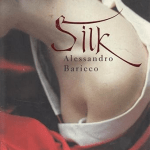
“Like Grasping Nothing”: Revisiting Alessandro Baricco’s “Silk”
Above all, “Silk” is a novel that dwells in silences and negative spaces, an examination of unfulfilled desire and all that remains unspoken. Joncour’s fixation on the young concubine that captured his imagination remains unrealized, buried beneath clandestine love notes and quick glances. Joncour himself remains evasive throughout the novel, his identity as slippery and difficult to grasp as a swath of silk (back home in France he becomes “the Japanese,” not only a reference to his travels, but also a hint at the other hidden inside the self). It is in these empty spaces that this story of desire and identity begins to unfurl, as lush and heady as a children’s fable.
Workshop Notes Part 2: Translation and Retranslation
Published in Italy in 1996, “Silk” (Seta) was an immediate bestseller. It was translated in English in 1997 by Guido Waldman – a respected translator and editor whose titles include Ludovico Ariosto’s “Orlando Furioso” and Giovanni Bocaccio’s “The Decameron.” Retranslated by none other than Ann Goldstein in 2006, “Silk” accompanied the film adaptation, an international co-production that didn’t receive much acclaim. Despite the film’s lackluster fate, the retranslation in English of a contemporary literary work by a living author less than 10 years after its first translation, is a notable event.
The Qualities of Silk in Ann Goldstein’s and Guido Waldman’s Translations of Alessandro Baricco’s “Silk”
“Silk” reads differently in each of its two English translations. The style of writing and the quality of the prose is where the two translations diverge. Goldstein has prioritized the “sparseness” of Baricco’s prose in a very literal sense. Her translation is minimal in its embellishments and its interpretation, rendering the novel into English in its most accurate, albeit plain, form. Waldman, on the other hand, has evidently prioritized the text’s beauty and lyricism.
Invisibility of the Foreign: The Double Life of Alessandro Baricco’s “Silk” in English Translation
Alessandro Barrico’s “Silk” is a story about the tension between Self and Other. Baricco’s main character Hervé Joncour travels repeatedly to Japan from his small, French town of LaVilleDieu in the 1860, to buy masses of silkworm eggs to replenish those at home struck by a silkworm-killing blight. Leaving his wife Hélène at home, he becomes secretly enamored with a young Japanese girl, whom he distinguishes for her eyes that “did not have an oriental slant” (19), a feature that immediately calls into question her otherness while nonetheless asserting her foreignness.

Between Italy and North America «In Rhyme and Without»: Giorgio Bassani’s “Collected Poems”
The publication of “The Collected Poems,” with excellent translations and critical apparatus by Roberta Antognini and Peter Robinson, represents, alongside Norton’s 2018 edition of “The Novel of Ferrara” translated by Jamie McKendrick, the culmination of Bassani’s work now available to the English-speaking public.
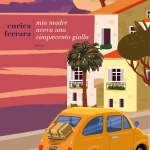
Translators on Books that Should Be Translated: Enrica Ferrara’s “Mia madre aveva una cinquecento gialla”
The novel is a vivid recapturing of Italian life in the 1980s, but more than that it engages, and beautifully captures, the universal mystery of each person’s origins – in a specific place and time, in a social caste, and, most of all, from a set of parents – and evokes the loneliness of that insoluble mystery.
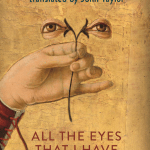
A Pervasive Method: on John Taylor’s Approach in Translating Franca Mancinelli’s “All the Eyes that I Have Opened”
Taylor’s translation appears to be a systematic operation—in other words—oriented by his acknowledgment of a philosophically (as well as poetically) coherent nucleus in “All the Eyes that I Have Opened,” a collection that constitutes one of the most interesting releases of recent contemporary Italian poetry.

Ritual sites of communion and community: Marosia Castaldi’s “The Hunger of Women,” translated from Italian by Jamie Richards
The novel is narrated from the perspective of a fifty-year-old Neapolitan widow, Rosa, whose daughter’s coming independence and plan to move to France lead to Rosa’s decision to start a restaurant in small-town Lombardy. Rosa’s restaurant becomes a source of orgiastic frenzy for the Lombard villagers, who devour her traditional Neapolitan cooking in a kind of carnal ecstasy.