
Tag Archives: Stiliana Milkova
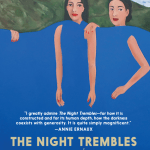
The Novel as Oracle and the Voice of Women Writers: Nadia Terranova’s “The Night Trembles,” Translated from Italian by Ann Goldstein
Nadia Terranova’s 2022 novel “The Night Trembles” (Trema la notte), translated in English by Ann Goldstein for Seven Stories Press (2025), gives voice to Barbara and Nicola, a young woman and a boy whose parallel plot lines develop against the background of a catastrophic natural disaster – the earthquake that decimated the cities of Messina and Reggio Calabria, on each side of the Strait of Messina, on December 28, 1908. Terranova, a contemporary Italian writer from Messina, has been mapping in her narratives the topographies of trauma – personal and collective – of her hometown and her native Sicily.

A Postmodern Historical Novel Reimagines 15th-century East-West Politics: Vera Mutafchieva’s “The Case of Cem,” Translated from Bulgarian by Angela Rodel
Long before postmodern historical novels such as Italo Calvino’s “Invisible Cities” (1972), Umberto Eco’s “The Name of the Rose” (1980), Christa Wolf’s “Cassandra” (1983), and Salman Rushdie’s “The Enchantress of Florence” (2008) captivated readers with their imaginative, thoroughly researched, and carefully plotted recreation of the past, there was Vera Mutafchieva’s “The Case of Cem” (1967).

Workshop Notes on Reviewing Nataliya Deleva’s “Four Minutes”
This post features a cluster of reviews of Nataliya Deleva’s novel “Four Minutes,” translated from Bulgarian by Izidora Angel. This post also reflects on the principles and practices guiding a new college course on the art and craft of the translation review essay.

Reading Natalia Ginzburg in the Twenty-First Century
The increased visibility of Natalia Ginzburg’s translated works and renewed engagement with her literary production speak to the traumatic realism of our own historical moment as we look for modes of resistance and survival. Ginzburg’s works, generated in part from the traumatic events that marked her own life, narrate in turn the minor and major hardships of human existence.

The Afterlives of Natalia Ginzburg’s “The Road to the City”
A new translation of “The Road to the City” (New Directions, 2023) extends the book’s afterlife and illuminates Ginzburg’s distinctive style. The translator, Gini Alhadeff, gives in to Ginzburg’s spare and concise narration without ever losing sight of the novella’s subtle meaning making.

Hard-boiled Detective Fiction or Socialist Realism? Vladislav Todorov’s “Zift,” Translated from Bulgarian by Joseph Benatov
“Zift” evokes the hard-boiled characters and settings of American detective fiction of the 1930s and film noir of the 1940s. The novel follows the nocturnal adventures of Moth, the first-person narrator, just released from the Central Sofia Prison after doing time for twenty years for a heist gone wrong. Moth – in Todorov’s perverse twist of the noir genre – is a character steeped in communist ideology and traversing the map of a distinctly communist city.

Join Us! Domenico Starnone in Conversation with Enrica Maria Ferrara and Stiliana Milkova
To celebrate both special issue “Reading Domenico Starnone” and the publication of Starnone’s latest novel in English, “Trust” (Europa Editions) translated by Pulitzer prize winner Jhumpa Lahiri, the Italian Cultural Institute in Dublin is hosting an online conversation with Domenico Starnone (in Italian with English translation), on 26 October 2021 at 6pm GMT (7pm in Italy), moderated by the editors of Reading Domenico Starnone.

The Alphabet of “Via Gemito”: A Photo Essay by Silvio Perrella
One day, a few years ago, Domenico Starnone himself came to my house for a visit. He brought his Via Gemito to my Via Luigia Sanfelice, so to say.

“Literature is the Sudden Disintegration of the Verbal Fabric of Everyday Life”: Domenico Starnone in Conversation with Enrica Maria Ferrara and Stiliana Milkova
I love the idea that the city we have left behind enshrines the ghost of the person we could have become, for better or worse, had we stayed there. And I am very fond of the idea that the ghost, which we consider part of us and therefore a friend, may turn out to be frightening or hostile.

On Bonds and Baggage: Domenico Starnone’s “Ties”
Starnone captures and dissects a vast array of concerns in a slim volume, neatly structured and tightly plotted, yet at the same time open-ended, without definitive answers or solutions. “Ties,” in other words, packs a lot of baggage into a small container while also leaving the container ajar, like Pandora’s box.

Elena Ferrante in a Global Context
This special issue was born out of the interweaving of our personal and professional stories, at the intersection of our different mother tongues and acquired languages, homelands, and disciplinary backgrounds. An Italian-Neapolitan scholar in Italy, a Bulgarian scholar in the United States, and a German scholar in the United Kingdom, we found a common ground through the study of Elena Ferrante and on the pages of a 2016 volume of the Italian scholarly journal Allegoria.

Reading Elena Ferrante in Bulgaria(n)
By Stiliana Milkova Last year I read Elena Ferrante’s new novel The Lying Life of Adults (La vita bugiarda degli adulti) in Bulgarian, in Ivo Yonkov’s translation from Italian. It was September 2020, it had just been released by Ferrante’s Bulgarian publisher, Colibri, and I was in Bulgaria myself. I went to Helikon, the largest […]

The Light of Turin: Natalia Ginzburg’s Cityscape
By Roberto Carretta Translated by Stiliana Milkova Via Morgari is located in Turin’s San Salvario neighborhood—a little Le Marais where the encounter and superimposition of new identities is the norm. San Salvario stretches from the nineteenth-century buildings, now apartment blocks flanking the Porta Nuova railway station, to the edge of the suburbs on the east. […]

Italo Calvino, “Natalia Ginzburg or the Possibilities of the Bourgeois Novel”
By Italo Calvino Translated from Italian by Stiliana Milkova and Eric Gudas Translators’ Introduction Natalia Ginzburg and Italo Calvino met in Turin in 1946, at the publishing house Einaudi where she was working as an editor and he would soon join the editorial staff. They became close friends and admired each other’s writing. In 1961, […]

On Female Genius: A Conversation with Italian Writer and Ginzburg Biographer Sandra Petrignani
Translators’ Introduction Sandra Petrignani is an acclaimed Italian writer and journalist, the author of many novels, collections of short stories, and volumes of non-fiction, including a biography of Marguerite Duras and a biography of Natalia Ginzburg, La corsara. Ritratto di Natalia Ginzburg (Neri Pozza, 2018). In her biography of Natalia Ginzburg, Sandra Petrignani draws on her […]