
Category Italian

Sewing Toward the Sea: Marosia Castaldi’s “The Hunger of Women” as Écriture Féminine
Rosa takes up the challenge of reinventing (recentering) her writing around women—an act of creation which Cixous might refer to as écriture féminine. And while culinary themes dominate her narrative, with lists of foods and recipes often spanning several pages at a time, Rosa accomplishes this recentering using two other themes: the metaphor of the sea, and a reimagined matrilineal genealogy.
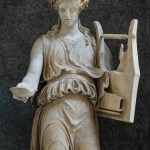
LISTENING IN TRANSLATION: THE PODCAST “AN ANCIENT LANGUAGE FOR A MODERN SOUL. POEMI CONVIVIALI BY GIOVANNI PASCOLI”
Throughout “Poemi Conviviali,” music surfaces again and again, sometimes eerie and disquieting, often located in the limbo between life and death, or dream and reality; sometimes as the Dionysian, ecstatic sound of drums and double flutes, but most often as melodies performed on a stringed instrument, the lyre, which is the ancestor of the modern harp.

Off in the Distance: Lalla Romano’s “In Farthest Seas,” Translated from Italian by Brian Robert Moore
Poignant, and at times breathtakingly honest, “In Farthest Seas” joins a select group of narratives that help us cope with the death of a loved one through the eyes of the writer, who cannot help but transform that pain into a story so that the writer, as well as the reader, may begin to comprehend it.

No Bridges at the Estuary: Giorgia Meriggi in Dialogue with Poet Franca Mancinelli and Translator John Taylor
This dialogue originated from my reading in August 2024 of Franca Mancinelli’s The Butterfly Cemetery, translated by John Taylor. Every day I put Franca’s collection of essays and narratives in my backpack and set off on long hikes in the high mountains.

Myth as Mirror: Cesare Pavese’s “The Leucothea Dialogues,” Translated from Italian by Minna Zallman Proctor
Rather than retelling myths, in “The Leucothea Dialogues” Cesare Pavese uses them as a framework for meditations on fate, death, suffering, and the fraught relationship between gods and humans.

Writing on the High Wire: Daniele Del Giudice’s “A Fictional Inquiry,” translated from Italian by Anne Milano Appel
How do you write about the compelling need to write, to translate reality into narrative, while also writing about someone who decided not to write? The title of Anne Milano Appel’s English translation, published by New Vessel Press, suitably spells it out: this is “A Fictional Inquiry,” an investigation into the nature of fiction itself and its entanglements with reality.

There Can Never Be Too Many Cooks: On Banana Yoshimoto’s “Kitchen” in English and in Italian Translation
For six years, I have had a tradition: right around the beginning of December, when the Florida heat finally cools off, I slip my copy of Banana Yoshimoto’s “Kitchen” off the shelf and allow it to rekindle a warmth within my being. Translated in English by Megan Backus, the light, intricate, and mouth-watering prose of the novella has delighted me endlessly.
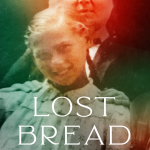
LONG, LONG AGO AND NOW: SASKIA ZIOLKOWSKI REVIEWS EDITH BRUCK’S “LOST BREAD” AND INTERVIEWS TRANSLATOR GABRIELLA ROMANI
“Lost Bread” represents multilingual worlds, with Hungarian, Yiddish, German, Russian, Hebrew, Arabic, French, and other languages woven into the narrative and author’s life. Both the Italian and English translation have footnotes for some of the phrases that appear. The narrator’s relationships to these languages evolve throughout the work.
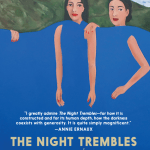
The Novel as Oracle and the Voice of Women Writers: Nadia Terranova’s “The Night Trembles,” Translated from Italian by Ann Goldstein
Nadia Terranova’s 2022 novel “The Night Trembles” (Trema la notte), translated in English by Ann Goldstein for Seven Stories Press (2025), gives voice to Barbara and Nicola, a young woman and a boy whose parallel plot lines develop against the background of a catastrophic natural disaster – the earthquake that decimated the cities of Messina and Reggio Calabria, on each side of the Strait of Messina, on December 28, 1908. Terranova, a contemporary Italian writer from Messina, has been mapping in her narratives the topographies of trauma – personal and collective – of her hometown and her native Sicily.

Where We Begin: Alba De Céspedes’ “There’s No Turning Back,” Translated from Italian by Ann Goldstein
“There’s No Turning Back” is an interesting early novel, and if one reads carefully one can detect the ways in which De Céspedes is searching for a voice. This is not to say that the novel is flawed, or even disappointing as an early novel. Instead, it gives the reader a profound introduction into the themes and style De Céspedes would later develop as a more mature writer.

Edith Bruck and What Women Writers Can Tell Us About the Holocaust
So on January 27, when the world marks the 80th anniversary of the liberation of Auschwitz, I will be thinking more than ever of Bruck’s words and the words of other women authors who survived the Holocaust. Of the 245,000 survivors left worldwide, 61 percent are women, according to the Claims Conference, which administers compensation from Germany on behalf of victims of the Nazis. But women’s accounts of surviving the Holocaust remain largely unknown.

The Bourgeois Shudder: Fantasy, Politics, Race
New York Review Books has been relaunching Dino Buzzati’s writing in English, bringing out new translations as well as reprints, and I am assembling a retrospective selection of fifty stories. The Italian texts pose unique challenges to a translator, partly because they were written some time ago (1930s-1970s), but also because the fantastic is perhaps the most subversive of narrative discourses, resistant to understanding, or indeed any form of interpretive control. It establishes an unreal world that disrupts dominant notions of what is real, making them seem variously unfamiliar, questionable, irrational – i.e., unreal in turn. Can this unsettling effect, I wonder, be recreated in a translation of Buzzati’s stories today, many decades after they were first published in Italian?
Does my translation have an accent? Exophonic Translation and the Experience of Language
Exophonic translators question not only the equation language and culture, but also the motives driving the translation of a certain work of literature in a certain language. The motives rest in the translator’s “language biography,” a complex and fascinating intersection of personal experiences, bodily encounters and relationships with languages and texts, as well as subjective perception of languages and cultures. In other words, with exophonic translators, the focus is not on the translated text, but on the translators themselves. This shift of focus from text to translator has led to the creation of a new sub field of Translation Studies, called Translator Studies, investigating the lived experiences of individual translators, or their Spracherleben.

Between Two Worlds: Viola Ardone’s “The Children’s Train,” Translated from Italian by Clarissa Botsford
Viola Ardone’s international bestseller “The Children’s Train,” translated in English by Clarissa Botsford, offers a touching glimpse into post-war Italy’s “happiness trains” (i treni della felicità). Part of a relief effort organized by the Italian Communist Party, these trains sent 70,000 impoverished children from southern Italy to live temporarily with families in the north. Through a blend of historical detail and imaginative storytelling, Ardone tells the tale of one child, Amerigo Speranza, and how his experience with the children’s train shapes his life.

“Like Grasping Nothing”: Revisiting Alessandro Baricco’s “Silk”
Above all, “Silk” is a novel that dwells in silences and negative spaces, an examination of unfulfilled desire and all that remains unspoken. Joncour’s fixation on the young concubine that captured his imagination remains unrealized, buried beneath clandestine love notes and quick glances. Joncour himself remains evasive throughout the novel, his identity as slippery and difficult to grasp as a swath of silk (back home in France he becomes “the Japanese,” not only a reference to his travels, but also a hint at the other hidden inside the self). It is in these empty spaces that this story of desire and identity begins to unfurl, as lush and heady as a children’s fable.