
Tag Archives: Literary translation

Shifting Sands: Mercè Rodoreda’s “Garden by the Sea,” Translated from Catalan by Maruxa Relaño and Martha Tennent
By Eva Dunsky In Garden by the Sea, translated by the mother-daughter team Martha Tennant and Maruxa Relaño, Rodoreda writes a slow burn towards catastrophe. Rodoreda, who is considered one of the most important Catalan writers of the 20th century, wrote often about Catalan society in the years before and after the Spanish Civil War, […]

Translators on Books that Should be Translated: Slavenka Drakulić’s “Marble Skin”
By Serena Todesco As a translator, I often find myself trying to find suitable images to describe what translation exactly entails. When it comes to authors from relatively unknown countries, such as Croatia, translation is indeed a form of irregular and unpredictable treasure hunting. Thanks to the strange combination of my academic interest in European […]

The Haunted Modernism of Jindřich Štyrský’s “Dreamverse,” Translated from Czech by Jed Slast
By Sean Lambert Reading Jindřich Štyrský’s dream journal highlights what an understudied genre of literature the dream journal is. Perhaps if there were a larger body of famous examples (Jack Kerouac’s Book of Dreams and William Burroughs’ My Education are desperate for company), it would be clearer how uniquely compelling, evocative and revealing is Štyrský’s […]

“Written in Exile: The Poetry of Liu Tsung-Yuan,” Translated from Chinese by Red Pine
By Heather Lang-Cassera Liu Tsung-Yuan has long been acknowledged as one of the most accomplished prose writers of the T’ang Dynasty. However, his excellent poetry was set aside for a time in China—largely because, relative to his prose, he wrote little of it—and it has been wildly under-translated into English. Fortunately, renowned translator Red Pine, […]

Framing by Fragmentation: Elena Ferrante’s “Incidental Inventions,” Translated from Italian by Ann Goldstein
By Stiliana Milkova The timing of Elena Ferrante’s Incidental Inventions is impeccable – it offers us an aperitivo before we can delve into her new novel scheduled to come out in English translation in June 2020. While we wait, we can flip leisurely through the pages of Incidental Inventions, translated from Italian by Ann Goldstein, and already in bookstores. […]

“As Others See Us”: Gabi Reigh on Translating Romanian Literature
Both contributor Gabi Reigh and I come from Eastern Europe. I grew up in Bulgaria. She lived in Romania and moved to the UK at the age of 12. Our literary traditions are little known outside our countries, and are often placed in a position of cultural and geographic marginality. So when I learned about […]

Maelstrom and Mirroring in Edoardo Sanguineti’s “My Life, I Lapped It Up,” translated from Italian by Will Schutt
By Judith Vollmer All good poems wrestle with acute contradictions. They sweat and sing the facts and mysteries of living, while simultaneously revealing the scaffoldings and artistic intentions of their surface textures. Sometimes poems sound imitative of traditions they’d rather reject. Sometimes they sound overly self-conscious and merely experimental. But when they’re good—even great—they […]

Edge to Edge: Laura Marris In Conversation With John Taylor and Pierre Chappuis
By Laura Marris Some of us, if we are lucky enough, have witnessed it—the moment when a passing line of clouds tangles with the trees of a ridge, blurring the distinctions between branches and vapor, between landscape and sky. This thoughtful, sensitive volume offers the poetic equivalent of that process, a brush between two imaginative […]

Silvina Ocampo’s Queer Eye: “Forgotten Journey,” translated by Suzanne Jill Levine and Katie Lateef-Jan; and “The Promise,” translated by Levine and Jessica Powell
By Dorothy Potter Snyder Do I contradict myself? Very well then I contradict myself, (I am large, I contain multitudes.) —Walt Whitman, Song of Myself Es tan corto el amor y tan largo el olvido. — Chavela Vargas Queerness resists definition and finds expression in the manifold array of ways of being and seeing in […]
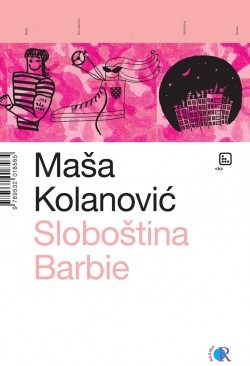
Translators on Books that Should be Translated: “SLOBOŠTINA BARBIE” BY MAŠA KOLANOVIĆ
By Ena Selimović In a review in The Guardian, Ranka Primorac argued that the “best of Croatia’s post-independence writing” challenges what she described as a “dualist (sunny beaches vs. nasty politics, ‘backward’ Croatia vs. ‘modern’ EU) mode of thinking.” Alongside the works of Zoran Ferić and Slavko Goldstein, Maša Kolanović’s Sloboština Barbie exemplified for Primorac […]

Nothing to See Here: Wioletta Greg’s “Accommodations,” Translated from Polish by Jennifer Croft
By Benjamin Paloff After reading Wioletta Greg’s Accommodations, one can be forgiven for wondering whether the novel—not this short novel in particular, but the novel as such, as a literary form—might have exhausted its possibilities. That is no slight against this pleasant, if forgettable, little book, just a pertinent observation about a text in which […]

On Dispersal and Translation: Golan Haji’s “A Tree Whose Name I Don’t Know,” Translated from Arabic by Stephen Watts and Golan Haji
By Ghada Mourad In an interview with Prairie Schooner, Golan Haji, a Kurdish Syrian poet, translator, and pathologist residing in France since 2011, states: “Translation is a process of changing places while you are in the same place […] It’s the stranger who comes to your house, is welcomed, is invited, and you know that […]

Translators on Books that Should be Translated: “Keder” by Yordanka Beleva
By Izidora Angel Keder, like other words in the Bulgarian language, is of Turkish origin. It means sorrow, but also grief and sadness. The story goes that the ancient Turks believed when a person dies, he bestows to his closest forty sorrows, for each of the forty days after death. With each passing day, fewer […]

Thresholds and Mothers: Elsa Morante’s “Arturo’s Island,” Translated from Italian by Ann Goldstein
By Saskia Elizabeth Ziolkowski Elsa Morante’s Arturo’s Island: A Novel is an enchanting, complex work about a boy, Arturo, growing up on the island Procida. He swims, struggles to understand his father, adores his dog, falls in love, and eventually leaves home. His drama of adolescent feelings is both universally relatable and singular. Since he […]

Comic Despair and Magical Melancholy: Duanwad Pimwana’s “Bright,” Translated from Thai by Mui Poopoksakul
By Parkorn Wangpaiboonkit At the outset of Duanwad Pimwana’s Bright, five-year old Kampol Changsamran’s family crumbles in ways he cannot comprehend. Told to sit and wait in the courtyard of their tenement neighborhood, Kampol obeys as his father drives away with his infant brother, promising to return. Abandoned without knowing why, Kampol drifts from house to […]