
Category Spanish

What the Translator Puts in Our Mouths: “Eating Ashes” and Performing Hate
Translation is both necessary and dangerous. Necessary because it carries a text—a culture—into another language, another readership, another field of attention. Dangerous because carrying is never neutral. It is handling, and handling leaves fingerprints. Those fingerprints are most legible where the stakes are highest: in a translation’s handling of racial epithets and slurs, where a choice that looks like mere intensity or “grit” can, in fact, dislocate the novel’s geography of contempt.
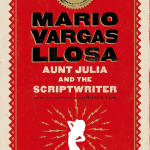
The Making of the Unoriginal: Writing and Writers in Mario Vargas Llosa’s “Aunt Julia and the Scriptwriter,” Translated from Spanish by Helen Lane
Using Lima as its backdrop, the novel presents two mostly disjointed pieces of writing. One, a largely autobiographical narrative of a certain Marito’s job as a radio news writer and his clandestine relationship with and later marriage to his aunt (by law, not blood), and the other, a collection of over-the-top radio soap operas written by the Bolivian escribidor Pedro Camacho.

A Vague and Uncertain Impression: Juan Rulfo’s “Pedro Páramo,” Translated from Spanish by Douglas J. Weatherford
By Harrison Betz Running just 120-odd pages in its most recent English translation by Douglas J. Weatherford, Juan Rulfo’s Pedro Páramo is as dense as it is short. The novel revolves around its titular character, don Pedro Páramo, as he maneuvers his way to the heights of regional, ranchero power in Comala, a remote town […]
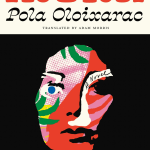
Mansplaining Mona: Against a Seamless Translation
The satirical character of Oloixarac’s novel morphs into mystery when the forgotten pieces of Mona’s recent past come back to haunt her. Bringing “Mona” into English posed an interesting challenge for the translator. Having never worked with humor, Morris’ task was to find a way to carry over the often-cruel satirical content of the novel.

The Uncanny in Our Back Yards: Mariana Enriquez’s “A Sunny Place for Shady People,” Translated from Spanish by Megan McDowell
A Sunny Place for Shady People: Stories is Mariana Enriquez’s follow-up to her brilliant and terrifying novel “Our Share of the Night.” This new collection is a triumphant return to the short form, a return that still contains the horror and sophistication of her novel but in more digestible bites. Readers of Enriquez will recognize her exploration of horror in this collection, all the while offering something new, something frighteningly comprehensible and insightful into our contemporary human condition.

Does my translation have an accent? Exophonic Translation and the Experience of Language
Exophonic translators question not only the equation language and culture, but also the motives driving the translation of a certain work of literature in a certain language. The motives rest in the translator’s “language biography,” a complex and fascinating intersection of personal experiences, bodily encounters and relationships with languages and texts, as well as subjective perception of languages and cultures. In other words, with exophonic translators, the focus is not on the translated text, but on the translators themselves. This shift of focus from text to translator has led to the creation of a new sub field of Translation Studies, called Translator Studies, investigating the lived experiences of individual translators, or their Spracherleben.

Box of FAQs. CAL PAULE ON TRANSLATING DIANA GARZA ISLAS’ “BLACK BOX NAMED LIKE TO ME”
“Black Box Named Like to Me” challenges the limits of syntax and image to hold the full scope of the imaginary in its grasp, touching on questions of motherhood, the future, memory, and the acquisition of language. The page is a zone for play, here, both in my translation and the original Spanish; words and ideas undergo radical transformation to best serve the purpose of the poems, shapeshifting at will.

“Mothers are weird”: Adriana Riva’s Salt, translated from Spanish by Denise Kripper
It can be useful to think of a work of translation as being a sort of progeny of the original text, its spitting image, yet one that, if successful, must become a creative work in its own right. Kripper has lived and worked in the US as an academic for many years, and translates in both directions between Spanish and English. “Spanish is my mother tongue. English, the language I became a mother in. I speak to my daughter in Spanish. I have an accent when I speak English. I hope readers can hear it in my translation,” Kripper writes in her translator’s note (13).
In the Indistinct Borderlands: Silvia Guerra’s “A Sea at Dawn,” translated from Spanish by Jesse Lee Kercheval and Jeannine Marie Pitas
Kercheval and Pitas’s translation of this career-spanning selection of poems marks the first appearance of Silvia Guerra’s work in English. Let me just say that it’s about time. The poems are dense without being claustrophobic, innovative without being gimmicky, and truly, refreshingly strange.

The Sacred and the Profane: Luis Felipe Fabre’s “Recital of the Dark Verses,” translated by Heather Cleary
This novel skillfully explores the blurred lines between the sacred and the profane. In 1592, half a year after St. John’s death, a bailiff and his two assistants, Ferrán and Diego, are hired to transport the body of St. John from Úbeda to Segovia. The journey of the secret transfer is long and challenging.
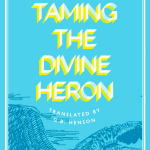
A Trick of the Tale: Reading and Traveling in Sergio Pitol’s “Taming the Divine Heron,” translated from Spanish by George Henson
“Taming the Devine Heron” is Henson’s sixth translation of books by Pitol. It’s also the second of his trilogy “The Love Parade.” The novel is a major work exhibiting Pitol’s cosmopolitan sensibilities. It’s also a meta-narrative that highlights the self-reflection so evident throughout his oeuvre. Pitol’s literary works are grounded in a type of hybridity that combines fiction, memoir, travel narrative, and biography, to name a few genres. In fact, the entire novel could be read as an exercise in literary imagination, which knows no borders and whose boundary is exclusively contained by the human capacity to wonder.

A Secular Epic: Amanda Berenguer’s “The Lady of Elche,” Translated from Spanish by Kristin Dykstra
Originally published in 1987, “The Lady of Elche” is Berenguer’s fourteenth book of poetry. It combines her characteristic intellectual curiosity with a meditation on the harsh political reality that her country had just lived through.

Andrea Abreu’s febrile words in “Dogs of Summer,” translated from Spanish by Julia Sanches
Andrea Abreu’s writing hand is neither soft nor measured. It punches through the film of language and lands, hard, on concrete. Julia Sanches’ translation of Abreu’s novel “Dogs of Summer” (Panza de burro, in the original Spanish) does not stop or stifle the forcefulness of this punch. It responds to it with equal parts fervor and frenzy, preserving the cuts and bruises that Abreu takes care to point us toward with the book’s narrator, affectionately called Shit. How can one possibly reveal this punch in English, save for getting out of the way?

Narratives of Mistranslation: Elena Schafer In Conversation with Denise Kripper
While “translation fictions” are not exclusive to Latin American literature, I did find their publication to be very consistent and prominent in its contemporary production in Spanish, and I believe their portrayal of translation relates very much to this locus of enunciation. Fictional translators would tamper with meanings, deviate conversations, and produce miscommunication on purpose. Fictional translators would tamper with meanings, deviate conversations, and produce miscommunication on purpose. Translators are thought to be unbiased, faithful, a bridge between languages and cultures, right? But that’s not what I was finding in these books.

It’s All Relative: The Multifold Self in Sergio Pitol’s “The Love Parade,” Translated from Spanish by G.B. Henson
“The Love Parade” is like a Japanese fan that slowly opens, revealing a beautifully painted landscape while still concealing the face behind it. What we learn about Miguel del Solar is divulged by the huge cast of characters he interviews for his book, each of whom embodies a fragment of his past. He is investigating a murder (or murders) that took place at the Minerva building where he lived as a child, a European-style mini-castle built in 1908 to house the representatives of foreign governments in Mexico City.