
Tag Archives: Literary translation

Neither Here And There: The Misery and Splendor of (Reverse) Translation*
In Bulgarian, which I translate from, translating into a language that’s not your native tongue is colloquially known as obraten prevod, which literally means “reverse translation.” As an adjective, obraten carries the negative connotation of something abnormal or backward, something that goes against the grain, or something that simply isn’t right.

“Keep your day job.” Edward Lipsett reveals what it’s really like to be an independent publisher of translated literature
Edward Lipsett discusses what makes a good translation, why, as a small publisher, you should never give up the day job, and what life is like in rural Japan during a global pandemic.

On Sex and Death: Vicente Huidobro’s “Skyquake: Tremor of Heaven,” co-translated from Spanish by Ignacio Infante and Michael Leong
Composed as twin originals in Spanish and French between 1928 and 1931, this roving long prose poem witnesses the perpetual, agonized yearning of separated lovers seeking one another across eternity and infinity, where they collide—gloriously—on occasion, before scattering through the universe once again.
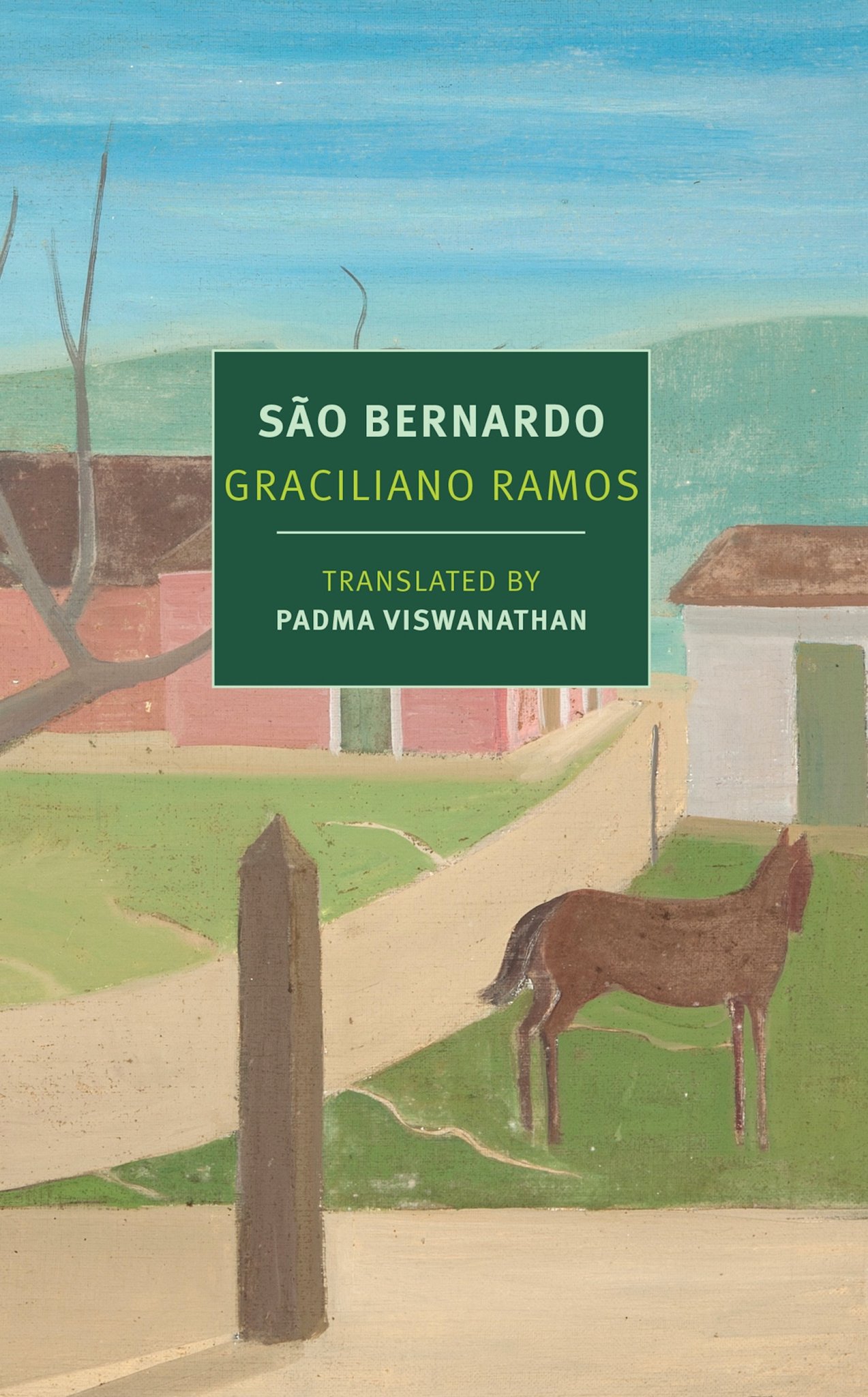
Finding Power, Losing Love: Graciliano Ramos’ “São Bernardo,” translated from Portuguese by Padma Viswanathan
Padma Viswanathan allows readers to recognize anew the importance of community in such a precarious moment with her translation of Graciliano Ramos’ rustic satire, São Bernardo.

In Love, at War, with Homer: Theodor Kallifatides’ “The Siege of Troy,” Translated from Swedish by Marlaine Delargy
By Kirk Ormand Few works have been translated as often, or as with as many different poetic and political programs, as Homer’s Iliad. Kallifatides’ brief version, written originally in Swedish, is his attempt to bring the daunting epic to a new generation of readers (“Afterword,” 203). He accomplishes this by telling the story of a […]

Foreign to Literature: Humor, Allusion, and Exophony in Aleksandra Lun’s “The Palimpsests,” Translated by Elizabeth Bryer
By Patrick Powers When I first read Elizabeth Bryer’s translation of Aleksandra Lun’s debut novel, The Palimpsests, back in January, I didn’t like it very much. I didn’t know what to say about it, so I didn’t write anything. After a few months, having left for and returned home from Russia after the onset of the global pandemic, […]

Turin Between Tradition and Translation: The “Extra” Salone del Libro
By Francesco Chianese Like many other events in recent months, Turin’s Salone del Libro, the most important Italian book fair, was moved online. Although reduced in schedule and deprived of its physical venue, from May 14 to May 17 the Salone still managed to convey to its affectionate followers a sense of its original, […]

The Global Novel and Elena Ferrante’s Uncanny Underground Realism: Tiziana de Rogatis’ “Elena Ferrante’s Key Words,” translated from Italian by Will Schutt
By Isabella Pinto Translated from Italian by Rebecca Walker The long-awaited English language version of Tiziana de Rogatis’ Elena Ferrante’s Keywords, recently published by Europa Editions, has been made possible thanks to the work of translator Will Schutt. The volume is ordered thematically by keyword, and is divided into seven chapters, preceded by a comprehensive […]

“The Dangerous Charm of Leaving”: Bogdan Rusev’s “Come To Me,” Translated from Bulgarian by Ekaterina Petrova
By Philip Graham The discovery of contemporary Bulgarian literature has been one of the great gifts of my recent reading life. Though the books I’ve read can be quite varied, they seem connected by a combination of humor and soulful melancholy, a literary territory where trouble can perhaps best be endured by sad or […]

Coming of Age Inside “A Bell Jar”: Magda Szabó’s “Abigail,” Translated from Hungarian by Len Rix
By Gabi Reigh “Creativity requires a state of grace,” Magda Szabó wrote in her 1987 novel The Door. “So many things are required for it to succeed—stimulus and composure, inner peace and a kind of bitter-sweet excitement.” Szabó’s life was not short of excitement, “bitter-sweet” or otherwise. She lived through the Second World War (which […]

In Search of the Weeping Woman: Brigitte Benkemoun’s “Finding Dora Maar,” Translated from French by Jody Gladding
By Mark Polizzotti Engaging with the life of a person you’ve never met can be an odd and disorienting business, and few know this better than biographers. What would push an otherwise sane adult to devote months, years, even decades to ferreting out the minutiae of someone else’s existence? And what is the strange alchemy […]

Word and Mirror: Burhan Sönmez’s “Labyrinth,” Translated from Turkish by Ümit Hussein
By Sevinç Türkkan Modern Turkish literature in English translation has always been meager. The Turkish language and culture with their liminal position across the imaginary East-West divide have been a cause for anxiety, reluctance, and uncertainty for publishers. It is, however, encouraging to see that contemporary writers other than the giants of Turkish letters in […]

A Terrible Beauty is Born: Fernanda Melchor’s “Hurricane Season,” Translated from Spanish by Sophie Hughes
By Emma B. B. Doyle The title of Fernanda Melchor’s Hurricane Season (La temporada de huracanes), translated by Sophie Hughes, takes its name from the many months in Mexico when you can look up at the sky and expect it to explode at any moment. This reliable forecast of disaster carries a similar tension to […]

Cardboard Conscious: Translation in Community
By Kelsi Vanada My favorite books of translated poetry to hold in my hands are no ordinary paperbacks: they are made of cardboard and screen-printed cardstock and hand-sewn signatures, crafted by independent publisher Cardboard House Press (CHP)’s Cartonera Collective in Phoenix, Arizona. I delight in handling them, rotating them to read the poems placed horizontally […]

“Gaza is Mayotte, Mayotte is France”: Natacha Appanah’s “Tropic of Violence” translated from French by Geoffrey Strachan
By Nathan Dize Gaza is a name capable of conjuring many ideas: statelessness, precarity, violence, tenuous and embargoed freedom, occupation, colonialism, and the list goes on. The name has also become synonymous with contested sovereignty in an era of postcolonial globalization, where, despite their supposed ephemerality, words like “settlements” and “camps” are imbued with a […]