

By Nathan Dize Mimola, or the Story of a Casket begins with an obituary, an homage to the family matriarch who survived the Middle Passage and who built and sustained a family, now two generations in the making. Antoine Innocent’s novel blends the urbane journalistic qualities of Port-au-Prince with the rich folk tradition of the […]

By Judith Vollmer Time is the muse and director of Piotr Paziński’s novel The Boarding House, in which a grandson returning to the site of childhood visits to his grandmother enters a claustrophobic journey into a broken world. The Time-muse, though austere, also exercises a seductive presence, advancing the sinuous pace of the novel in […]

Content Warning: Sexual Violence, Rape By Alec Joyner Over the last few years, more and more novels, memoirs, and books of poetry have begun to plumb the depths—the intricate, historically entrenched structures of sexual violence—that extend far beneath the #MeToo hashtag. These books are making a case, implicitly, for the ongoing value of literature, a […]

By Mihaela Moscaliuc Née Iosef Hechter, Mihail Sebastian (1907-1945) was a Jewish Romanian prose writer, playwright, journalist, and lawyer who left us chilling testimonies of the milieu leading up to and spanning World War II, which Sebastian survived at great emotional cost, only to be killed by a truck in 1945. Women appeared in […]

This month, in memory of our contributor Professor Jed Deppman who founded the Oberlin College Translation Symposium, instituted a literary translation minor, and taught courses in literary translation and comparative literature, we are featuring three reviews by Oberlin College Comparative Literature graduates and students, taught and trained by Professor Deppman and other Oberlin College faculty. Professor […]

This month, in memory of our contributor Professor Jed Deppman who founded the Oberlin College Translation Symposium, instituted a literary translation minor, and taught courses in literary translation and comparative literature, we are featuring three reviews by Oberlin College Comparative Literature graduates and students, taught and trained by Professor Deppman and other Oberlin College faculty. Professor […]

This month, in memory of our contributor Professor Jed Deppman who founded the Oberlin College Translation Symposium, instituted a literary translation minor, and taught courses in literary translation and comparative literature, we are featuring three reviews by Oberlin College Comparative Literature graduates and students, taught and trained by Professor Deppman and other Oberlin College faculty. Professor […]

by Stiliana Milkova The reclusive clockmaker Anton Ivanovic has disappeared from his apartment in Turin. His only friend, the erudite professor of mythology Joshua Momigliano, receives a letter which sends him on a quest to find out what happened to Anton. As Joshua asks in the opening pages, “Anton Ivanovic was a reserved, impenetrable man […]

By Dimiter Kenarov Looking back at the Soviet Union, nearly three decades after its demise, I can’t shake off the feeling of vertigo. That terrifying whale of an empire, whose blubber once stretched over a sixth of the landmass and most of the twentieth century, seems like a distant memory now, a mythical creature that […]
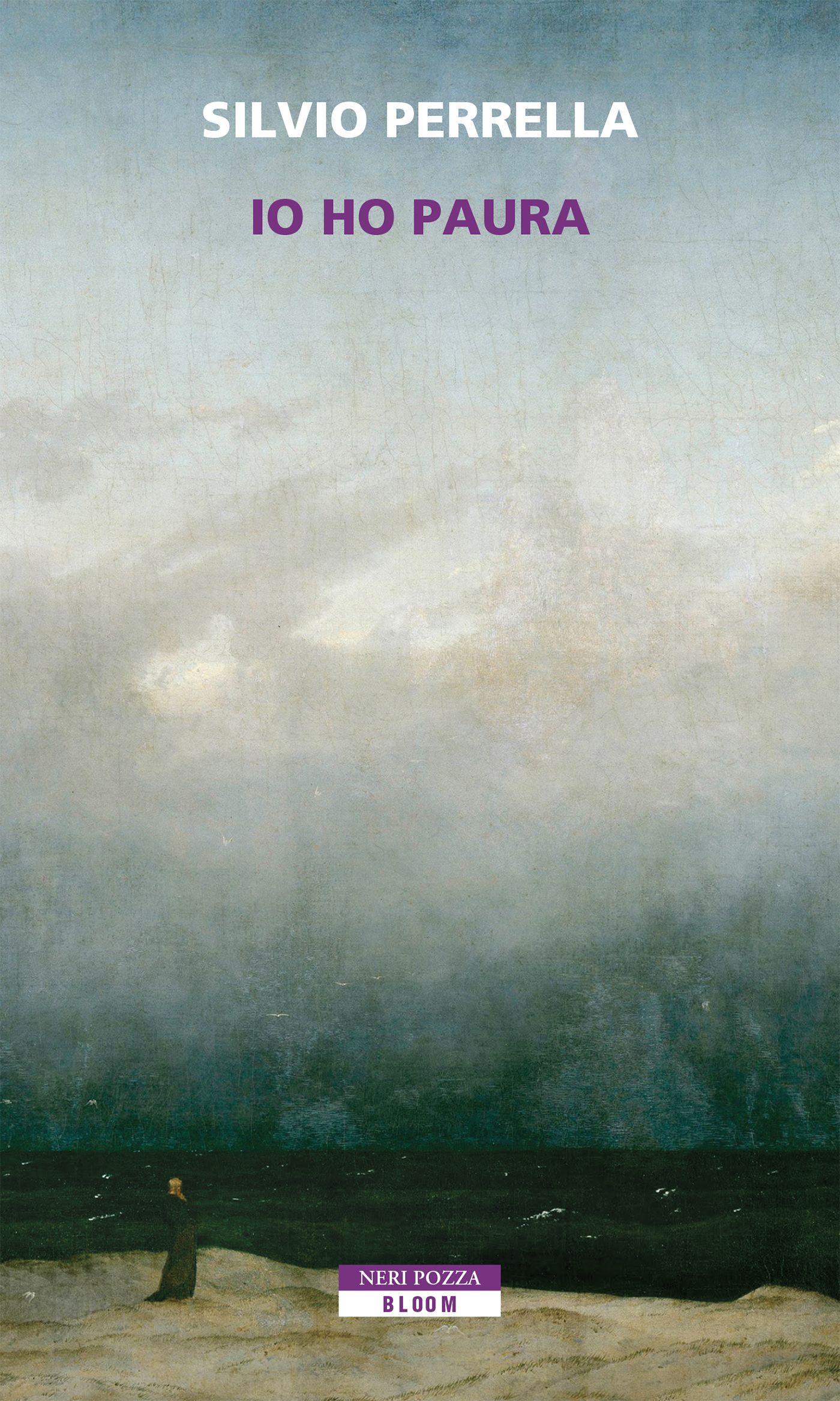
By Enrica Maria Ferrara There is a book that came out in 2018 and regretfully has not been translated into English yet, though it definitely deserves to be known well beyond Italian national borders. Its title in Italian, Io ho paura (I am scared), is evocative of a popular Italian novel written by Niccolò Ammaniti in 2001, […]

By Molly Thomasy Blasing From its very first pages, Pavel Arseniev’s Reported Speech shows itself to be true to its title; the opening poem’s epigraph comes to us, we are told, from an “Instruction in the platzkart train car” (15). This is only the beginning of a journey through a trail of words found, mixed […]

by Maurizio Vito Bertolt Brecht’s epigraph from The Threepenny Opera at the beginning of Rosella Postorino’s novel At the Wolf’s Table ushers in the undertone characterizing the story the reader is about to peruse: “A man can only live by absolutely forgetting he’s a man like other folk.” Forgetting is one way to survive troubled […]

By Rebecca DeWald When I first read Stan Nadolny’s The Discovery of Slowness (translated from German by Ralph Freedman), which follows Sir John Franklin on his arctic exploration, I was struck by the way in which the quality of “slowness” both becomes a plot device and its conceit: the reader sees the world through […]

By Alessandro Mondelli In Of Death. Minimal Odes, Brazilian poet Hilda Hilst imagines death not only as the absence of life or as life’s negation, but also as a productive force that imbues life with a wide yet nuanced palette of affects. Hilst, recognized in Brazil as a seminal writer, poet, and playwright of twentieth-century […]

By Nathan Dize In a 1975 interview, journalist Jean Léopold Dominique praised Frankétienne’s publication of Dézafi, meaning “cockfight,” because it provided a polysemic analogy for Haitian life, at once a metaphor as well as a depiction of reality. The cockfight in the novel takes place both in the actual cockfighting ring, but also in the […]