

By Amanda Al-Raba’a On November 20, 1979 an insurgent group called al-Ikhwan led by Juhayman al-‘Utaybi besieged the Grand Mosque in Mecca in opposition to the Saud family and increased Western influence in Saudi Arabia. Two of the pillars of Islam are intimately linked to the Grand Mosque: it houses the Ka‘aba, towards which Muslims […]

By Julia Peterson In Explosions: Michael Bay and the Pyrotechnics of the Imagination, translated from French by Aleshia Jensen, Mathieu Poulin has penned a captivating, whirlwind tour through film and philosophy, presented as a false biography of American filmmaker Michael Bay. At times vividly cinematic, at times intensely intellectual, and often sharply parodying one or […]

By Jessica Sequeira The two books gathered in this 2018 co•im•press translation as Vision of the Children of Evil, translated by Lucina Schell—“Fantastical Fragments” (1965) and “Vision of the Children of Evil” (1967)—were written in the decade before the military coup in Argentina, and it is understandably tempting to view them through a biographical lens. […]

By Janet Lee Sarah Léon wrote Wanderer in 2016, at age twenty-one, four years after she had published her first work, the novella Mon Alban. The novella is narrated from the perspective of a mother writing to her musically-gifted son Alban, unable to send her letters since Alban disappeared over the Berlin wall, leaving her […]

By Ursula Deser Friedman She is one of China’s most prominent novelists and a champion of experimental literature. Can Xue (残雪) is the pen name of the avant-garde writer and literary critic Deng Xiaohua (1953-). In Chinese, can xue means “residual snow,” a phrase describing, in Deng’s words, both “the dirty snow that refuses to […]

By Kalau Almony The value of literature is often credited to the way literary texts allow us to vicariously experience places and events we otherwise would have no immediate access to. The argument goes that literature thus enables us to expand our own limited worldviews and become better people, capable of making more ethical decisions. […]

By Leah Barber In 1919, before earning his reputation as an influential Romanian modernist, Lucian Blaga was a sensitive, passionate newlywed who penned his first book Poems of Light (Poemele Luminii), now out in a discerning new translation by Gabi Reigh. Blaga dedicated this early collection to his then-new bride, but its territory is ambitious, […]

By Sabrina Jaszi Leonid Yuzefovich’s novella The Storm details the minutely calibrated network of emotions and ideology underlying daily life at a Soviet primary school in the Urals. An early work by Yuzefovich who gained prominence in the last two decades for his detective novels set in 19th century Russia, a period which he also […]

By Alex Andriesse I was slow to come around to Gerard Reve’s writing—slow at least by twenty-first-century standards. A year ago, when I first tried reading his novel The Evenings, I found it so dull I couldn’t concentrate and gave up after the second chapter. I knew that in the Netherlands The Evenings was a […]

By Ena Selimović “This is an indecent book,” Dubravka Ugrešić’s American Fictionary proclaims in a new co-translation by Celia Hawkesworth and Ellen Elias-Bursać, and then continues: I have always believed (and still do) that a writer with any self-respect should avoid three things: a) autobiography; b) writing about other countries; c) diaries. (7) This proclamation […]
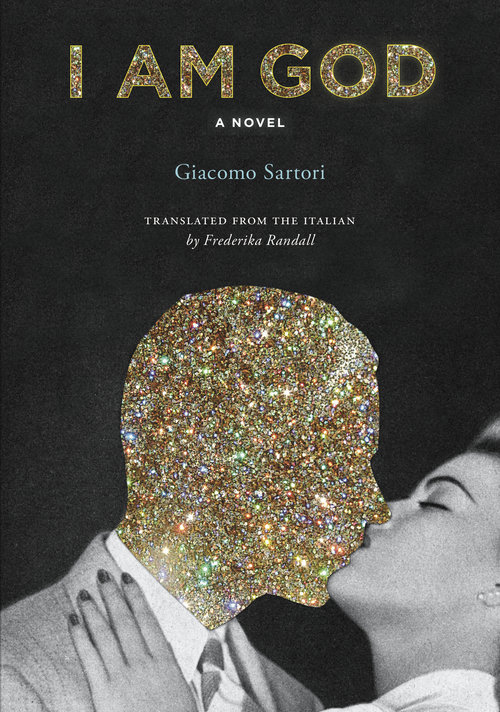
by Stiliana Milkova What does God’s diary read like? What secret fantasies and obsessions does the Almighty entertain? Giacomo Sartori’s novel I Am God tackles these questions in a humorous, provocative, and perspicacious account of mankind’s doings seen through the eyes of none other than God. I Am God is the diary of God as […]

by Jonathan Stone In a way, Relative Genitive should get three reviews: as Val Vinokur’s translation of eighteen poems by Osip Mandelshtam, as Val Vinokur’s translation of seven (mostly longer) poems by Vladimir Mayakovsky, and as a collection of thirty eight poems by Val Vinokur. However, the artfulness with which Vinokur fuses and navigates those […]

By Todd Portnowitz At a 5” x 7” trim size and 97 pages—including the facing Italian texts and an introduction—Franca Mancinelli’s The Little Book of Passage is indeed a little book. A libretto, as the original title has it. It’s a word that, for the native English speaker, evokes firstly the opera, though in Italian libretto […]

by Milena Deleva Chad Post is the publisher of Open Letter Books at the University of Rochester, a non-profit press dedicated to publishing literature in translation which he founded in 2007. But it does more than publishing: the press is at the center of an ecosystem that creates context and appetite for translated literature. In […]

Reviewed by Gabi Reigh Eventide is Therese Bohman’s third novel and just as the heroines of Drowned (2012) and The Other Woman (2016), Karolina, the novel’s protagonist, is a disenchanted observer of the workings of Swedish society, rejecting its norms through her self-destructive emotional entanglements and exposing its hypocrisy about sexual politics. In an interview […]