
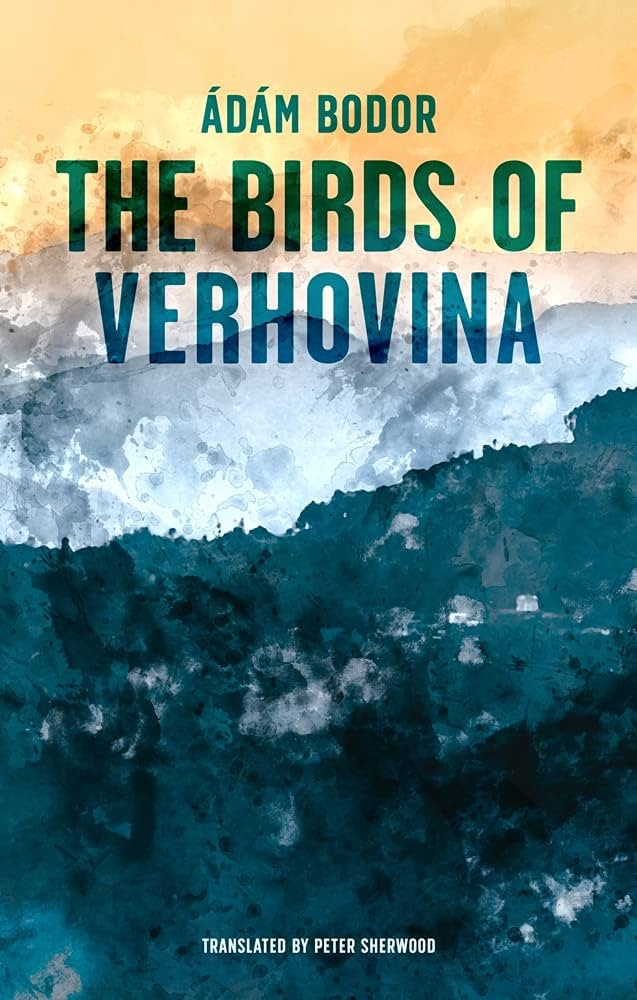
Bodor’s prose, in Sherwood’s translation, retains its casual and conversational tone, almost inviting readers to have the text read out loud to enjoy its aural pleasures. That said, the translation also successfully negotiates the nuances of a complex text, and excels at conveying its dark and subversive humour. Most importantly, the translation resists explicitating the original’s ambivalence, in an attempt to refrain from patronizing readers and intrusively helping them navigate Bodor’s frequently disorienting prose.
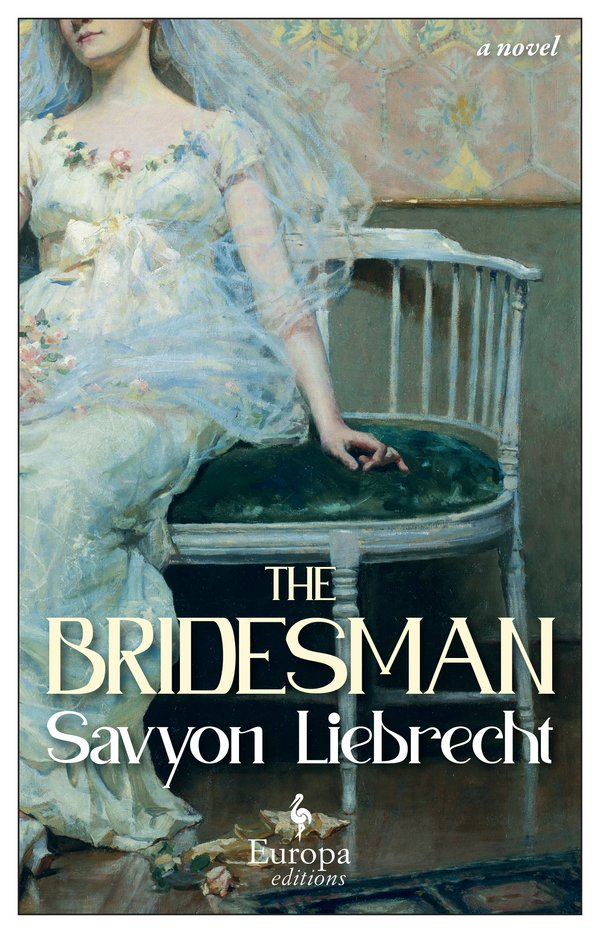
The English title of Israeli author Savyon Liebrecht’s latest work, “The Bridesman,” translated by Gilah Kahn-Hoffman, is a clever rendering of the Hebrew term “shoshbeen,” denoting the close friend or relative of either sex who accompanies bride and groom (one each) to the wedding canopy. The book, set within an Iranian Jewish family in Israel at the end of the 20th century, revolves around the relationship of two young people. It ends in a startling reveal of abuse, paradoxically conducted in the name of family values.

This novel skillfully explores the blurred lines between the sacred and the profane. In 1592, half a year after St. John’s death, a bailiff and his two assistants, Ferrán and Diego, are hired to transport the body of St. John from Úbeda to Segovia. The journey of the secret transfer is long and challenging.
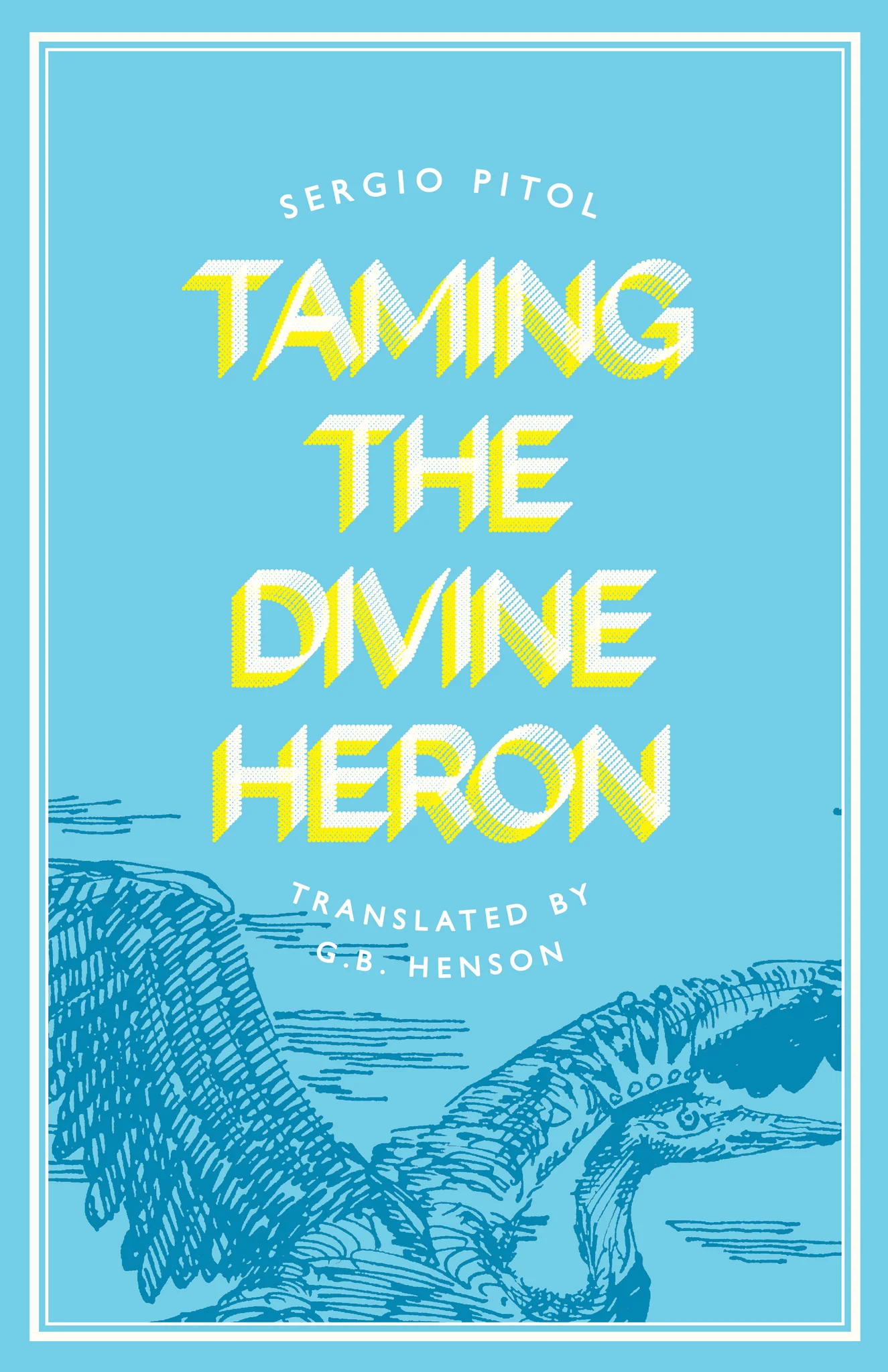
“Taming the Devine Heron” is Henson’s sixth translation of books by Pitol. It’s also the second of his trilogy “The Love Parade.” The novel is a major work exhibiting Pitol’s cosmopolitan sensibilities. It’s also a meta-narrative that highlights the self-reflection so evident throughout his oeuvre. Pitol’s literary works are grounded in a type of hybridity that combines fiction, memoir, travel narrative, and biography, to name a few genres. In fact, the entire novel could be read as an exercise in literary imagination, which knows no borders and whose boundary is exclusively contained by the human capacity to wonder.

Originally published in 1987, “The Lady of Elche” is Berenguer’s fourteenth book of poetry. It combines her characteristic intellectual curiosity with a meditation on the harsh political reality that her country had just lived through.

Melinda Mátyus’ novel in verse “MyLifeandMyLife” is one of the most original pieces of experimental fiction published in Hungarian in recent years. We are grateful to Ugly Duckling Presse for allowing us to publish here Jozefina Komporaly’s translator’s note in which she discusses Mátyus’ unique sense of grammar and syntax, and her own approach to translating it.

Gini Alhadeff is a prize-winning translator, curator, and author, including of fiction, with the novel “Diary of a Djinn,” and of non-fiction, with a multitude of articles and her memoir “The Sun at Midday: Tales of a Mediterranean Family.” She grew up in Egypt, Sudan, Italy, and Japan. She studied fine art and photography at Harrow in England and at Pratt Institute in New York. She recently translated Natalia Ginzburg’s “The Road to the City” for the distinctive series, Storybook ND, that she curates for New Directions. This interview was conducted over zoom on October 6th, 2023 with Gini Alhadeff in New York City and Saskia Ziolkowski in Durham, NC.
A new translation of “The Road to the City” (New Directions, 2023) extends the book’s afterlife and illuminates Ginzburg’s distinctive style. The translator, Gini Alhadeff, gives in to Ginzburg’s spare and concise narration without ever losing sight of the novella’s subtle meaning making.

Haitian writer Kettly Mars confronts readers with the silence surrounding mental illness in her novel “I Am Alive,” translated by Nathan H. Dize. Set in the immediate aftermath of the 2010 earthquake and told from multiple viewpoints, the novel plunges us into the secluded world of the Berniers, a bourgeois family living in Fleur-de-Chêne.

Andrea Abreu’s writing hand is neither soft nor measured. It punches through the film of language and lands, hard, on concrete. Julia Sanches’ translation of Abreu’s novel “Dogs of Summer” (Panza de burro, in the original Spanish) does not stop or stifle the forcefulness of this punch. It responds to it with equal parts fervor and frenzy, preserving the cuts and bruises that Abreu takes care to point us toward with the book’s narrator, affectionately called Shit. How can one possibly reveal this punch in English, save for getting out of the way?

When narrative itself, literature itself, has been complicit in constructing oppression, how can it be escaped, resisted, unmade? Translation might be one answer. In the move from one language to another, the attempt to place a text or image or idea from the past in the present, or even (taking translation in a very broad sense) from one medium or genre to another, the act of translation opens little gaps that, with each word, phrase, sentence, chapter, even layout, cover, paratext, leave room for intervention.

The mesmerizing power of “Ninth Building” comes from the mixture of the quotidian, run-of-the-mill activities humans undertake and the violent, absurd practices promoted by political propaganda during the Revolution. Described from a passive, observant, sometimes sarcastic perspective, suicide, beatings, permanently damaging diseases, fatal accidents, and pangs of loss, guilt, and regret bleed into the mundane activities of a child playing, card games, pranks, harvest, lumber, brigade duties, and composing and performing music.

In the volume’s artful and engaging introduction, Beichman calls our attention to several correspondences with contemporary poetics: first, there is the speculative orientation of Ishigaki’s work, capable of uncanny leaps in spatial and temporal perspective. Then there is its under-explored connection to eco-critical thought. And finally there is its playful but intense awareness of the agentive role of fantasy and imagination in constructing ‘real life.’

While “translation fictions” are not exclusive to Latin American literature, I did find their publication to be very consistent and prominent in its contemporary production in Spanish, and I believe their portrayal of translation relates very much to this locus of enunciation. Fictional translators would tamper with meanings, deviate conversations, and produce miscommunication on purpose. Fictional translators would tamper with meanings, deviate conversations, and produce miscommunication on purpose. Translators are thought to be unbiased, faithful, a bridge between languages and cultures, right? But that’s not what I was finding in these books.

“Zift” evokes the hard-boiled characters and settings of American detective fiction of the 1930s and film noir of the 1940s. The novel follows the nocturnal adventures of Moth, the first-person narrator, just released from the Central Sofia Prison after doing time for twenty years for a heist gone wrong. Moth – in Todorov’s perverse twist of the noir genre – is a character steeped in communist ideology and traversing the map of a distinctly communist city.