
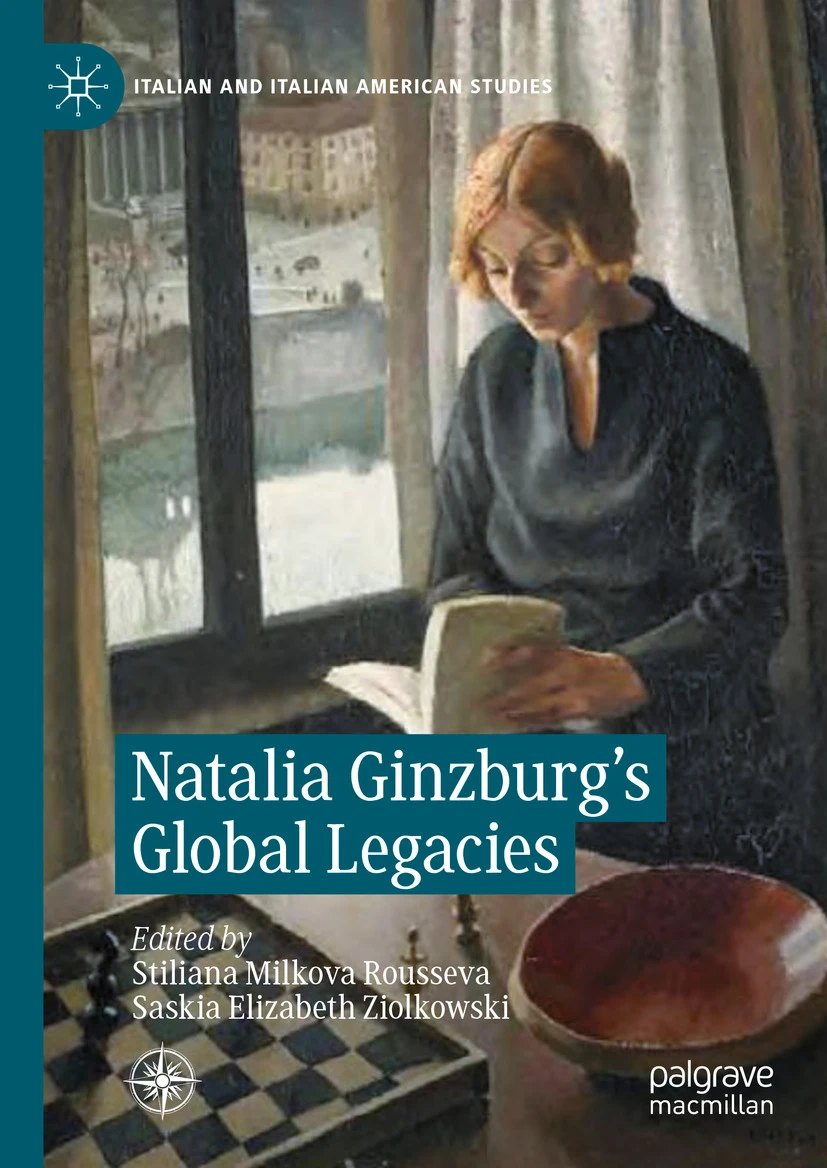
The increased visibility of Natalia Ginzburg’s translated works and renewed engagement with her literary production speak to the traumatic realism of our own historical moment as we look for modes of resistance and survival. Ginzburg’s works, generated in part from the traumatic events that marked her own life, narrate in turn the minor and major hardships of human existence.
The human fascination with visibility is fully on display in the new series published by Deep Vellum called “Best Literary Translations,” which places translators (thirty-eight of them) and editors (five) center stage—alongside the fifty-two journals who nominated a combined five hundred pieces for consideration. (Let me also point out another occasionally overlooked narrative voice of a book: the copyright page, where it will be clear to you, if it wasn’t already, once you get to the line “used by permission of Metallica,” that you’re in for a treat.)
The memoir “Dove non mi hai portata” by multi-awarded poet and journalist Maria Grazia Calandrone was published in Italy in 2022 to huge public and critical acclaim. A finalist for the 2023 Strega Prize, now translated into English by Antonella Lettieri as “Your Little Matter” for Foundry Editions, this book is a restitution. This is the first information we learn as we dwell over the book’s threshold and read its epigraph: “All I have seen of you, to you I return, loved.”
For me, translating this book, in which dialect plays such an integral role, was a continuation of my ongoing nurturing of my Sicilian roots. From the time I first visited Sicily, slept in the room where my maternal nonna Biagina did as a girl, and delighted in the fragrance of jasmine wafting from the terrazza outside her window, Sicily, its scents, flavors, rituals and ways have been formative. So it was not surprising that one of the first choices I made when I began translating the book, was to leave as much of the dialect in there as I could without rendering the text illegible to English readers.
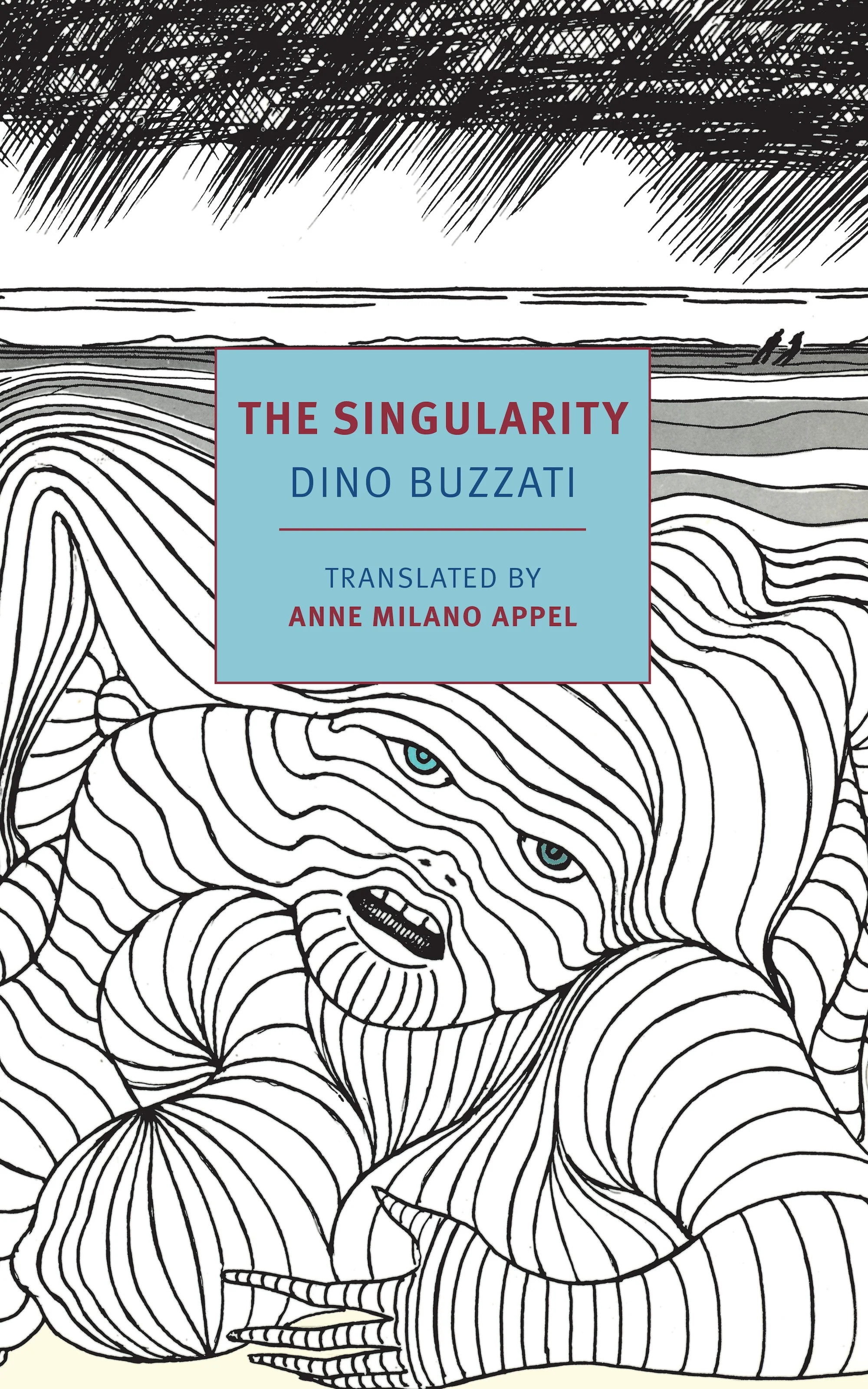
Anne Milano Appel’s new translation of Dino Buzzati’s “The Singularity” is a timely translation: long considered one of the author’s minor works, Buzzati’s parable of artificial intelligence and the ethics of technology will resonate deeply with today’s readers.

Oonagh Stransky’s translation of Domenico Starnone’s monumental novel “The House on Via Gemito” (Europa Editions, 2023) is a tour de force. The vast, complex narrative comes to life in Stransky’s words, enabling in English Starnone’s profound investigation of a son’s relationship with his larger-than-life, exuberant, violent, irrepressible father. Longlisted for the 2024 International Booker Prize and shortlisted the 2024 Oxford-Weidenfeld Prize, Stransky’s translation deserves more attention.

Godzilla is about adaptation. For one (as the origin story goes): Godzilla is a prehistoric reptilian creature roused from the depths of the Pacific Ocean by hydrogen bomb testing, a creature monstrously adapted to possess radioactive power more destructive than the weapons that gave rise to him. But Godzilla is also about narrative adaptation: since Ishiro Honda’s original film was released in 1954, the story has mutated into various iterations throughout its long-standing franchise. Contributing to this ever-expanding universe of Godzilla stories is Jeffrey Angles’ English translation of two novellas by Japanese science-fiction writer Shigeru Kayama, titled “Godzilla” and “Godzilla Raids Again,” first published in 1955.
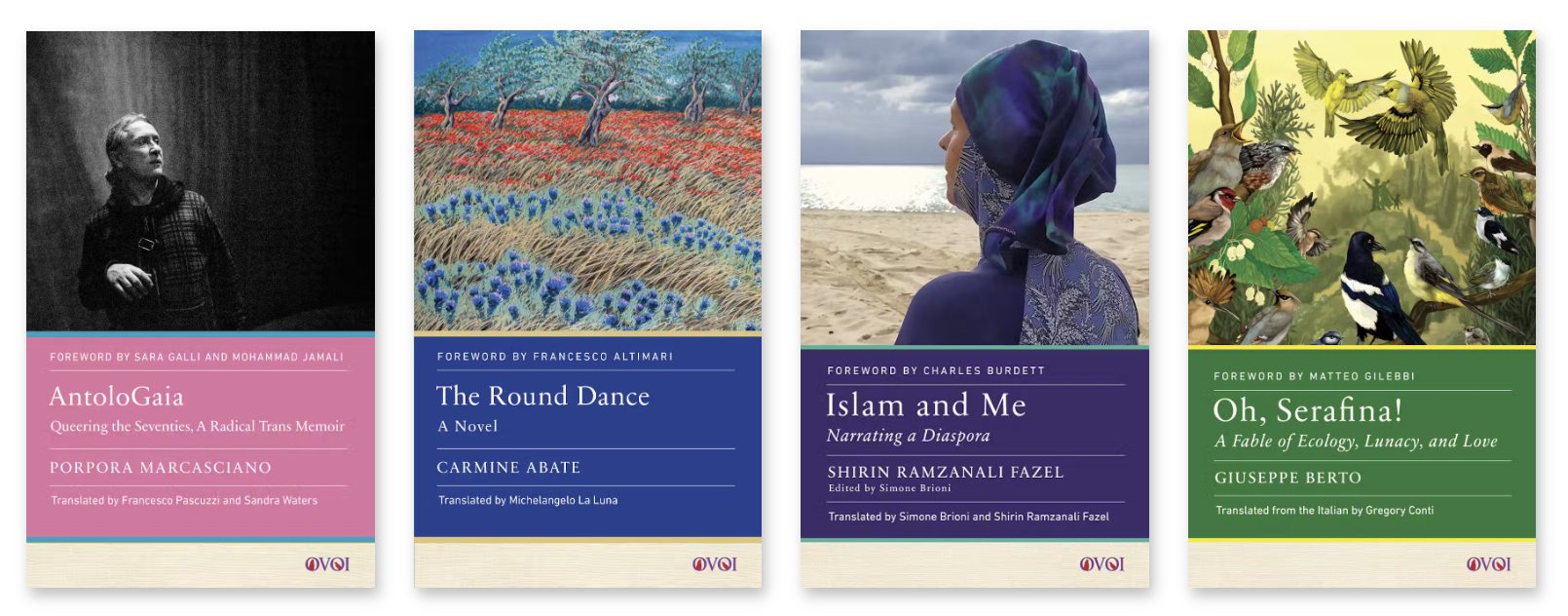
The one thing all OVOI translated books have in common is their origin from the margins, either because their authors are exophonic and transnational and have been neglected by mainstream Italian criticism, because the texts deal with problematic themes, or because existing translations do them no justice. Several of the authors we publish for the first time in English are displaced people and a lot of them are women. Some of the stories the books narrate are about gender, sexuality, racial and class discrimination, testimonies of marginalization and abuse.

A year ago, I was relatively new to the United States – living in Durham, North Carolina – when I found a copy of “The Collected Stories of Eudora Welty” in my neighborhood’s Little Free Library. I did not know Welty, but I took the book with me. I thought reading it could be a good way to get oriented. After reading some of it, I closed the book, but something in that story, “Where is the Voice Coming From?,” asked me to translate it. I didn’t understand why. It is a somewhat problematic story, I thought. I felt uneasy.

Ginster, the Critical Idiot? Siegfried Kracauer’s “Ginster,” translated from German by Carl Skoggard
One does not think of fiction when one hears of Siegfried Kracauer, which is a shame. Most Americans who know of the man are acquainted with the two books on cinema he produced after escaping Nazi Europe for New York: the highly influential “From Caligari to Hitler” (1947) and the tome that is “Theory of Film” (1960). But Kracauer also wrote two novels, “Ginster” (1928) and “Georg” (1973, posthumous), and a handful of novellas and short stories, all of which have so far evaded the readerly radar on this side of the Atlantic.
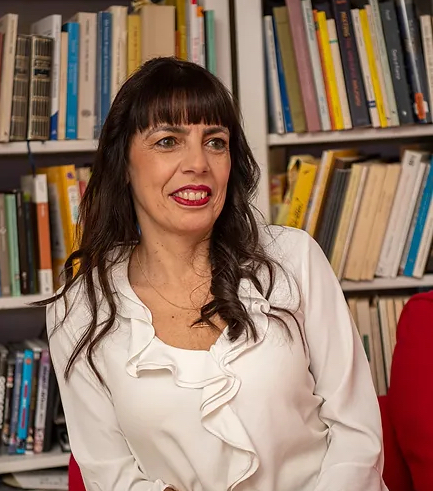
An Italian-Irish scholar, translator, teacher, and writer, Enrica Ferrara is a Renaissance woman. In this energetic conversation with Stiliana Milkova Rousseva, Enrica Ferrara recounts the story of her debut novel in Italian, “Mia madre aveva una cinquecento gialla” (Fazi, 2024), and discusses some of its major themes and plot elements.

Vladimir Veniaminovich Bibikhin (1938-2004) was a philosopher, translator, and philologist. During the 1970s and 1980s, Bibikhin established himself as a prominent translator of the most complex philosophical, theological, and literary texts, and as a widely respected humanitarian scholar of a rare and extensive erudition. His translations were remarkable not only as philological, but also as philosophical achievements, as they aggressively revised the principles of text interpretation, typical of the Russian tradition of philosophical translation—something that made many of his contemporaries suspicious of his theoretical and ideological proclivities.

To the extent to which translation is a new re-play, a re-shaping of the given material according to the universal language rules, it is, in principle, just as independent as the original. It is simply that same original, only re-cast in a new form, and continuing to live in that new form. The original appears to be original only outwardly, in a temporal sense. In essence, that is, in its relation to the possibilities of human speech, it is not more original than the translation. The original is lost, imprisoned in its private form. Translatability rescues it from those constraints.

Kercheval and Pitas’s translation of this career-spanning selection of poems marks the first appearance of Silvia Guerra’s work in English. Let me just say that it’s about time. The poems are dense without being claustrophobic, innovative without being gimmicky, and truly, refreshingly strange.
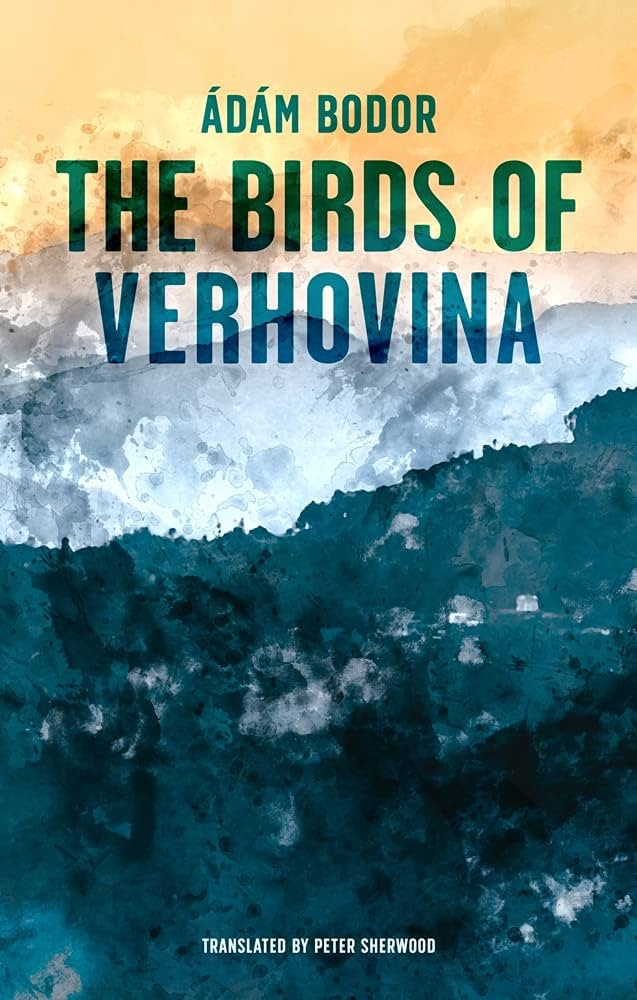
Bodor’s prose, in Sherwood’s translation, retains its casual and conversational tone, almost inviting readers to have the text read out loud to enjoy its aural pleasures. That said, the translation also successfully negotiates the nuances of a complex text, and excels at conveying its dark and subversive humour. Most importantly, the translation resists explicitating the original’s ambivalence, in an attempt to refrain from patronizing readers and intrusively helping them navigate Bodor’s frequently disorienting prose.